

Netanyahu’s Next Move: 5 Possible Ways Israel Could Break Election Deadlock
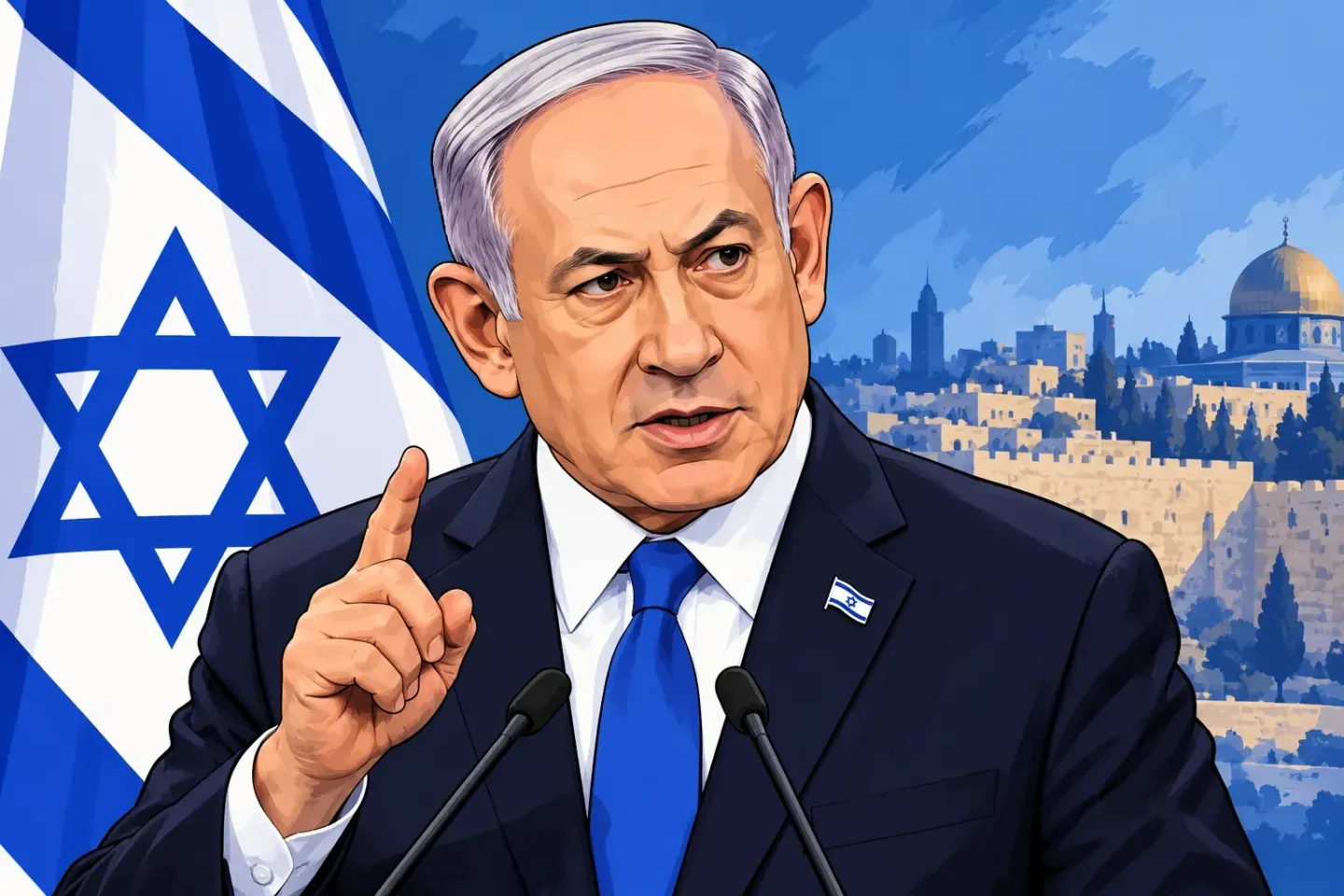
Israel’s election has produced a political deadlock, but Benjamin Netanyahu may still have several opportunities to return to power. Although no political bloc has secured the 61 seats required to form a government in the 120-member Knesset, the parliamentary numbers could give Netanyahu an advantage during coalition negotiations.
According to the election figures presented, Netanyahu’s Likud party emerged as the largest faction with 27 seats, while his broader right-wing and far-right bloc secured 53 seats. The opposition bloc, led by centrist Gadi Eisenkot, holds 48 seats. Meanwhile, Arab political parties Ra’am and the Joint List collectively control 19 seats, potentially giving them a decisive role in determining the next government.
The figures leave Netanyahu eight seats short of a parliamentary majority. However, the opposition also faces significant political challenges, particularly in maintaining unity and securing support from Arab parties. Several possible political arrangements could determine how Israel moves forward.
One possibility is a broad unity government led by Netanyahu. With 53 seats already secured by his wider bloc, he would need support from just eight additional lawmakers to reach the 61-seat threshold. Centrist and right-wing opposition factions, including parties associated with Gadi Eisenkot, Avigdor Lieberman and Naftali Bennett, could potentially help form a broader coalition. Such an arrangement could reach approximately 66 seats.
However, the political cost could be considerable. Opposition parties campaigned against Netanyahu and promised voters they would remove him from office. Joining his government could force those parties to abandon major campaign commitments. Nevertheless, prolonged negotiations and the possibility of another election could increase pressure to reach a compromise.
A second possibility involves a unity government with a rotating premiership. Under this arrangement, Netanyahu could initially remain prime minister before transferring the position to Eisenkot or another opposition leader at an agreed time.
Such a deal could provide a route toward political stability, but it may be difficult to negotiate. Netanyahu leads the largest party and the largest political bloc, giving him little obvious incentive to voluntarily surrender the premiership. Eisenkot, meanwhile, would need to decide whether sharing power is preferable to allowing Netanyahu to remain in office.
A third option could involve Netanyahu attempting to divide the opposition and attract individual lawmakers or smaller factions. Rather than securing the support of an entire opposition party, he could seek agreements, defections or support on individual parliamentary votes.
The opposition bloc includes centrist, center-left and right-wing political forces that are united largely by their opposition to Netanyahu. However, disagreements over security policy, the economy, settlements, religion and relations with Arab parties could make maintaining that unity difficult.
If those divisions deepen, Netanyahu could potentially secure enough additional support to strengthen his position without forming a broad unity government.
The fourth possibility could give the opposition an opportunity to form its own government. Eisenkot’s bloc has 48 seats, while Ra’am and the Joint List together hold another 19. Combined, those groups would control 67 seats, making this the clearest mathematical route to a government led by Eisenkot.
However, the political challenges are substantial. Accepting support from Arab parties could create tensions among some Jewish voters and opposition allies. Rejecting that support, on the other hand, could make it difficult for Eisenkot to reach the required majority.
There is also a previous example of Arab participation in Israeli coalition politics. Ra’am joined a governing coalition in 2021, becoming the first independent Arab party to formally enter an Israeli coalition. That government lasted approximately 18 months before collapsing. A similar arrangement could therefore be possible, although its stability would remain a major concern.
Another potential outcome is a government that survives through outside support rather than a conventional coalition. Netanyahu could attempt to secure temporary agreements, confidence votes or support from individual lawmakers without bringing every supporting party formally into the government.
Such an arrangement could allow a government to remain in office despite lacking a traditional 61-seat coalition. However, it would likely remain vulnerable to parliamentary disagreements and could collapse if lawmakers withdrew their support.
The fifth and final possibility is another election. After the final results are formally certified, President Isaac Herzog is expected, under the process described, to consult political parties and select the candidate considered most likely to form a government.
If the candidate fails, another leader could receive an opportunity. If no one succeeds within the constitutional timeframe, Israelis could return to the polls.
However, another election would not necessarily resolve the political divisions. The same parties could return, and Netanyahu could once again emerge as the leader of the largest faction.
Ultimately, the parliamentary arithmetic gives Netanyahu several possible routes to political survival. He could pursue a unity government, negotiate a rotating premiership, attract opposition lawmakers, explore outside parliamentary support or wait for coalition negotiations to break down.
Eisenkot faces a different challenge: maintaining unity among 48 opposition lawmakers while securing support from Arab parties without alienating potential allies.
The central issue is that neither side currently has the 61 seats needed to form a government independently. Netanyahu’s bloc is eight seats short, while the opposition bloc would need 13 additional seats before accounting for the political complications surrounding Arab-party support.
As negotiations continue, the outcome could depend less on the election result itself and more on political alliances, parliamentary agreements and the ability of competing leaders to maintain support. Netanyahu may not have secured a majority, but the deadlock leaves him with several potential paths back to power.



Comments
A free account lets you join the discussion.
Loading comments…