

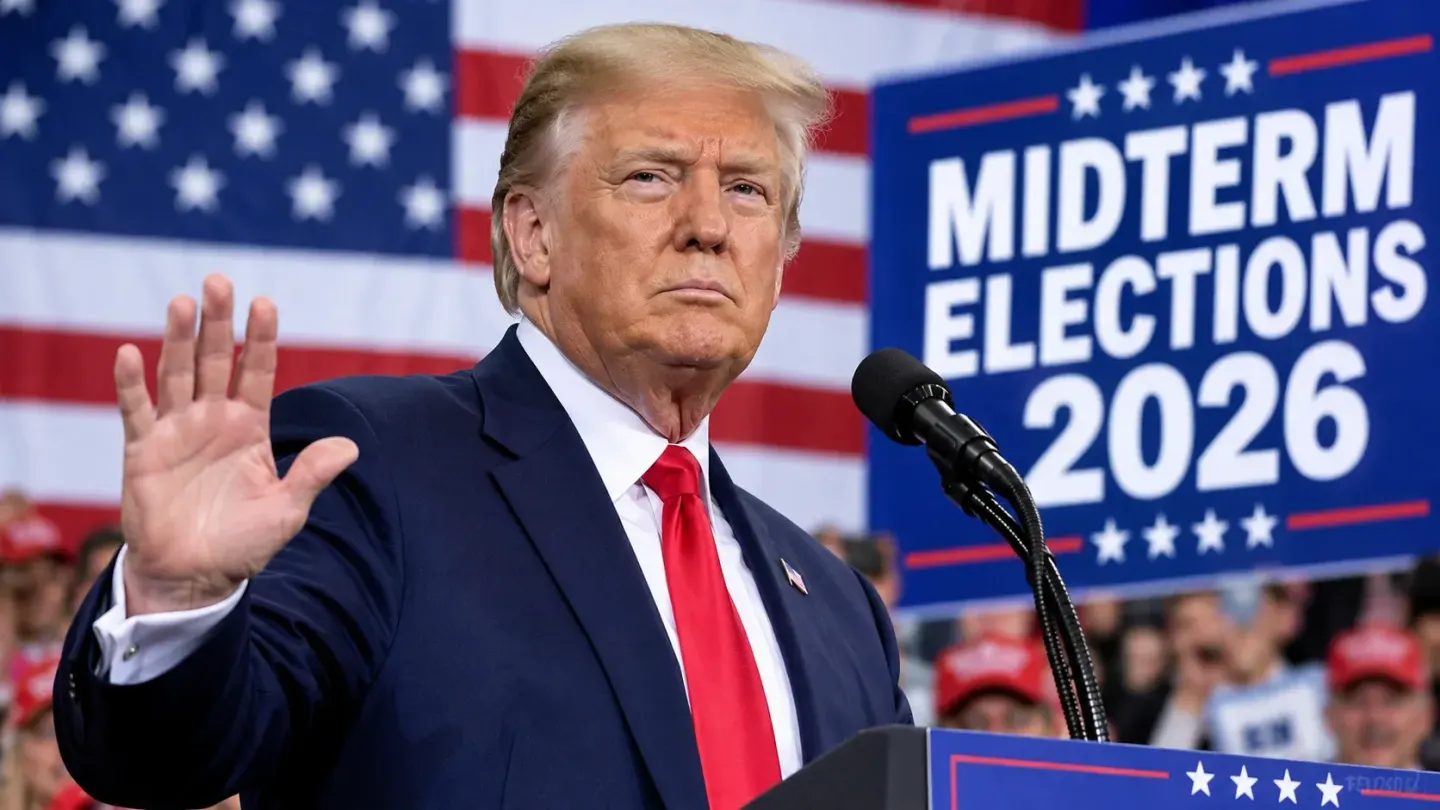
President Donald Trump has canceled his final two scheduled campaign rallies ahead of the 2026 US midterm elections, raising questions about the Republican Party's strategy, the president's influence on competitive Senate races and the potential impact of his declining approval ratings.
The White House announced the schedule change just five days before voters head to the polls, removing planned appearances in Iowa and Kansas. Trump is now scheduled to hold one remaining rally in Florida, although officials indicated that additional campaign appearances could still be arranged.
The decision has attracted attention because Trump has maintained an unusually busy campaign schedule throughout the midterm election cycle. He held approximately 25 rallies during the month, including an appearance in South Carolina supporting Republican Senator Lindsey Graham.
The canceled events are particularly significant because Iowa and Kansas are traditionally Republican-leaning states where GOP candidates are facing competitive challenges from Democrats. Both states have become important battlegrounds as Republicans attempt to maintain their Senate positions.
When questioned about the cancellation of his Kansas appearance, Trump dismissed suggestions that his decision was related to his health or ability to travel. He said he did not feel it was necessary to visit Kansas and insisted that he was feeling perfectly well.
The president also defended his campaign efforts, highlighting the number of rallies he had attended and describing the demanding schedule as physically exhausting. He said campaigning at such a pace was a strain on his voice and required an unusual level of commitment.
However, Trump's explanation has not stopped political observers from examining the possible electoral implications of the cancellations.
According to reporting cited in the discussion, some Republican officials privately welcomed the decision. One senior Republican official reportedly expressed relief, arguing that Trump's appearances had not significantly improved the party's electoral prospects.
The political situation in Kansas illustrates the challenges facing Republicans. Senator Roger Marshall, whose campaign had expected a Trump rally, suggested that the president might have better places to spend his time. However, recent CNN polling indicated that the Kansas Senate race remained extremely competitive, with no clear advantage outside the margin of error.
A similar situation is developing in Iowa, where polling has also indicated a closely contested race. Both states represent important opportunities for Democrats as they attempt to make gains in the Senate.
The debate over Trump's campaign strategy has also revived comparisons with the 2018 midterm elections. During the final 72 hours of that campaign, Trump held seven rallies across Montana, Florida, Georgia, Tennessee, Ohio, Indiana and Missouri. His willingness to travel extensively during the closing days of an election campaign was previously considered an important part of his political approach.
This time, however, the strategy appears different. White House officials have suggested that alternative campaign appearances, including tele-rallies, could allow Trump to reach larger audiences in a shorter period.
Political analysts remain divided over whether this approach will be effective. Supporters argue that tele-rallies provide greater campaign reach, while critics believe Trump's physical presence at rallies is essential for energizing Republican supporters and generating local political momentum.
Another major concern is Trump's approval rating. Political commentators have pointed out that his popularity remains relatively weak, including in traditionally Republican states such as Texas, Iowa and Kansas. This has raised questions about whether his participation in local campaigns could actually become a disadvantage for Republican candidates.
Some analysts argue that Trump's appearances could generate additional attention for Democratic candidates and motivate voters who oppose his administration. Others believe that strong Republican loyalty in traditionally conservative states could still make his involvement beneficial.
Polling has also become a central issue in the final days of the campaign. Recent CNN surveys have suggested that Democrats are leading in several key Senate contests, although Republican officials have repeatedly argued that polling organizations may be underestimating Trump's core supporters.
Political analysts caution that polling errors can occur in either direction. A particularly important question is whether voters who are difficult to reach through traditional polling methods will participate in the midterm elections. While some of these voters strongly support Trump, their participation rates in midterm elections may differ from those in presidential elections.
Early voting patterns have added another dimension to the political debate. In states including Texas, Nevada and Georgia, analysts have observed increased participation among Democratic voters, particularly younger people, occasional voters and Latino communities.
These developments could influence the final election results if newer voters continue participating at higher rates. However, early voting figures alone do not necessarily establish which party will ultimately win the contested races.
The quality of Republican candidates has also become part of the discussion. Some commentators have questioned whether certain GOP candidates are benefiting from Trump's endorsement, suggesting that his presence may not necessarily strengthen candidates who are already struggling against their Democratic opponents.
There are also questions about whether Trump's demanding campaign schedule has contributed to the cancellations. At 80 years old, the president has undertaken an extensive series of campaign appearances, and some observers have suggested that exhaustion could be a factor. However, no official explanation has established fatigue or health concerns as the reason for the schedule change.
With the 2026 US midterm elections approaching, Trump's decision to cancel rallies in Iowa and Kansas has become another indication of the difficult political calculations facing Republicans. Whether the shift reflects a strategic effort to reach more voters through alternative formats or concerns about the effectiveness of in-person campaigning remains an open question.
Ultimately, the election results will provide a clearer indication of whether Trump's campaign appearances have strengthened Republican candidates or whether his political influence has become a challenge for the party in closely contested Senate races.



Comments
A free account lets you join the discussion.
Loading comments…