

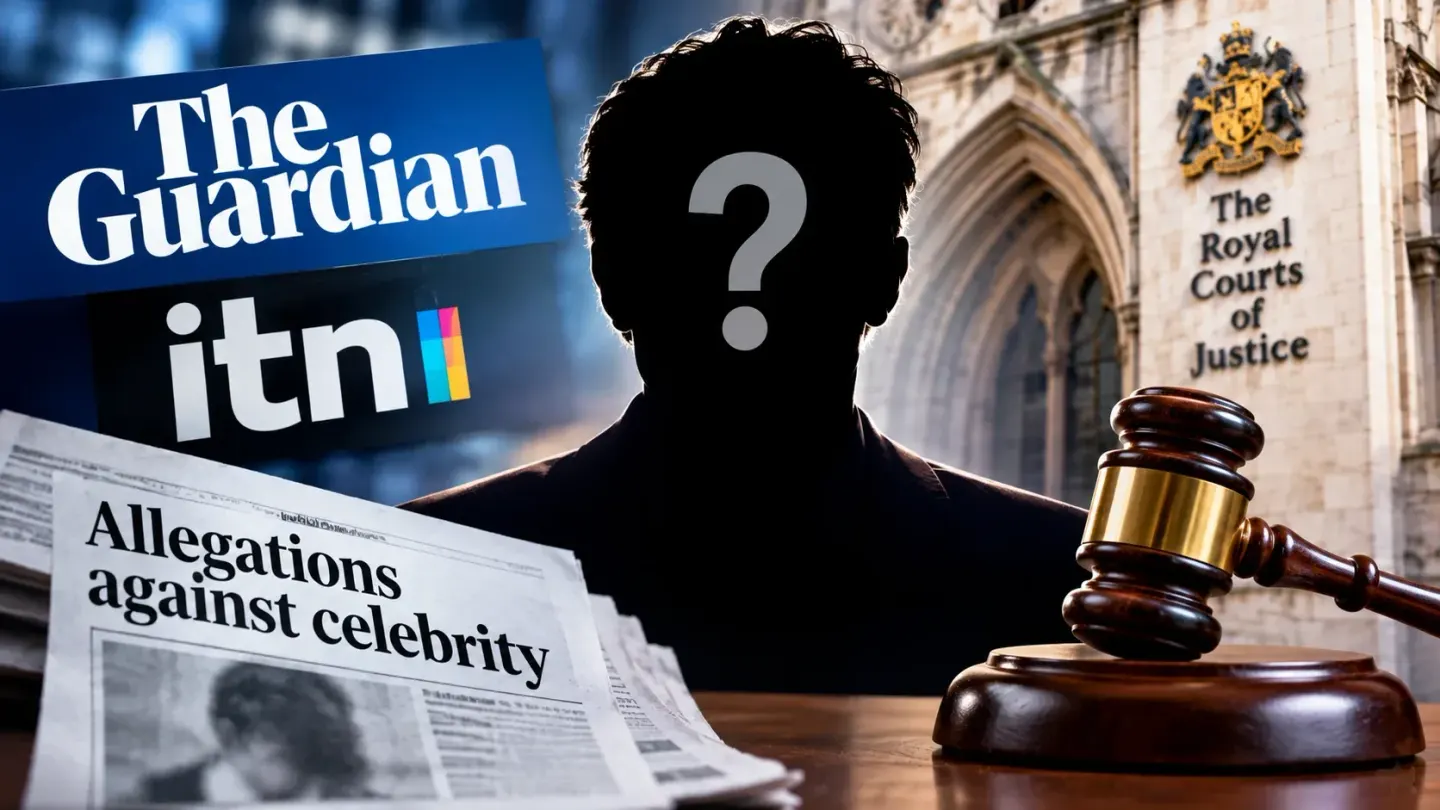
An unnamed male celebrity has lost his legal battle to prevent two major British media organisations from publishing allegations against him, following a significant High Court ruling. However, the judge has indicated that the man can challenge the decision at the Court of Appeal, meaning the legal dispute could continue.
The high-profile case involves the Guardian Media Group and ITN, the television news organisation responsible for producing news content for ITV and other broadcasters. The celebrity had sought an injunction to stop the organisations from publishing allegations and information concerning his alleged conduct.
The High Court rejected his application, with the judge describing the proposed restriction on publication as an exceptionally serious interference with freedom of expression. Despite the ruling, the man's identity remains protected, and he cannot currently be publicly named.
The case followed a two-day hearing at the end of last month, during which the court examined arguments surrounding the proposed publication and the claimant's legal rights.
According to the media organisations, their investigation uncovered allegations that the unnamed celebrity had attempted to engage in inappropriate and exploitative sexual activities involving a large number of young women. The organisations said they had gathered approximately 30 first-hand accounts and spoken to more than 100 individuals, including women making allegations against the man, as well as people who knew him professionally and personally.
The Guardian and ITN argued that their sources were anxious for the information they had provided to be published. They maintained that there was a strong public interest in allowing the findings of their investigation to be reported.
However, the claimant's legal team argued that publication could have devastating consequences for his mental health and potentially put his life at risk. During the proceedings, the court heard that the man had previously made two suicide attempts and had experienced serious mental health difficulties. He was also reported to be receiving hospital treatment at the time of the judgment.
His lawyers relied on Article 2 of the European Convention on Human Rights, which protects the right to life. They argued that the state had a responsibility to protect him from a foreseeable risk of suicide by preventing the publication of the allegations.
However, the judge concluded that there was no proper legal basis for granting the requested injunction. The court accepted that the possibility of publication and the ruling itself could create a real and immediate risk to the claimant's life, but determined that this did not establish a separate legal obligation requiring the court to prevent the media organisations from publishing.
Legal commentator Joshua Rozenberg explained that the case raised unusual legal questions about the relationship between the right to life, privacy and freedom of expression.
He highlighted the distinction between Article 8 of the European Convention on Human Rights, which protects the right to private and family life, and Article 10, which safeguards freedom of expression and the media's ability to publish information.
However, he explained that the central question before the court was not whether the allegations were true or false. Instead, the issue was whether the court had an independent legal obligation to prevent publication in order to protect the claimant's life.
The judge ultimately ruled that such an obligation did not exist in the circumstances of the case.
Importantly, the High Court proceedings did not determine the accuracy or truthfulness of the allegations against the unnamed celebrity. The hearing focused specifically on whether an injunction should be granted to prevent their publication.
The legal battle may not be over yet. The claimant's legal team has the opportunity to challenge the High Court decision at the Court of Appeal, with a deadline of 4:30 p.m. on Monday to lodge the appeal.
His lawyers explained that they were working under exceptional circumstances because their client was currently in hospital, making it difficult to obtain legal instructions directly from him.
Meanwhile, the media organisations have stressed the importance of acting quickly, citing concerns raised by their sources and the individuals who participated in the investigation.
The ruling has attracted considerable attention because of its potential implications for media freedom, privacy rights and the legal responsibilities of courts when publication is alleged to create a serious risk to an individual's life.
For now, the unnamed celebrity remains unidentified, the allegations remain untested in court, and the possibility of an appeal leaves the future of the case uncertain.


تبصرے
مفت اکاؤنٹ بنا کر بحث میں شامل ہوں۔
تبصرے لوڈ ہو رہے ہیں…