

Immigration enforcement actions targeting Haitian workers in the United States are creating growing challenges for the poultry industry, local businesses and healthcare providers, particularly across the Delmarva Peninsula, one of the country's largest poultry-processing regions.
An immigration crackdown under President Donald Trump's administration has left many Haitian employees afraid to report to work, even when they previously held legal authorization to live and work in the United States. The resulting labor shortages are disrupting poultry operations and putting additional pressure on communities that have relied heavily on Haitian workers for years.
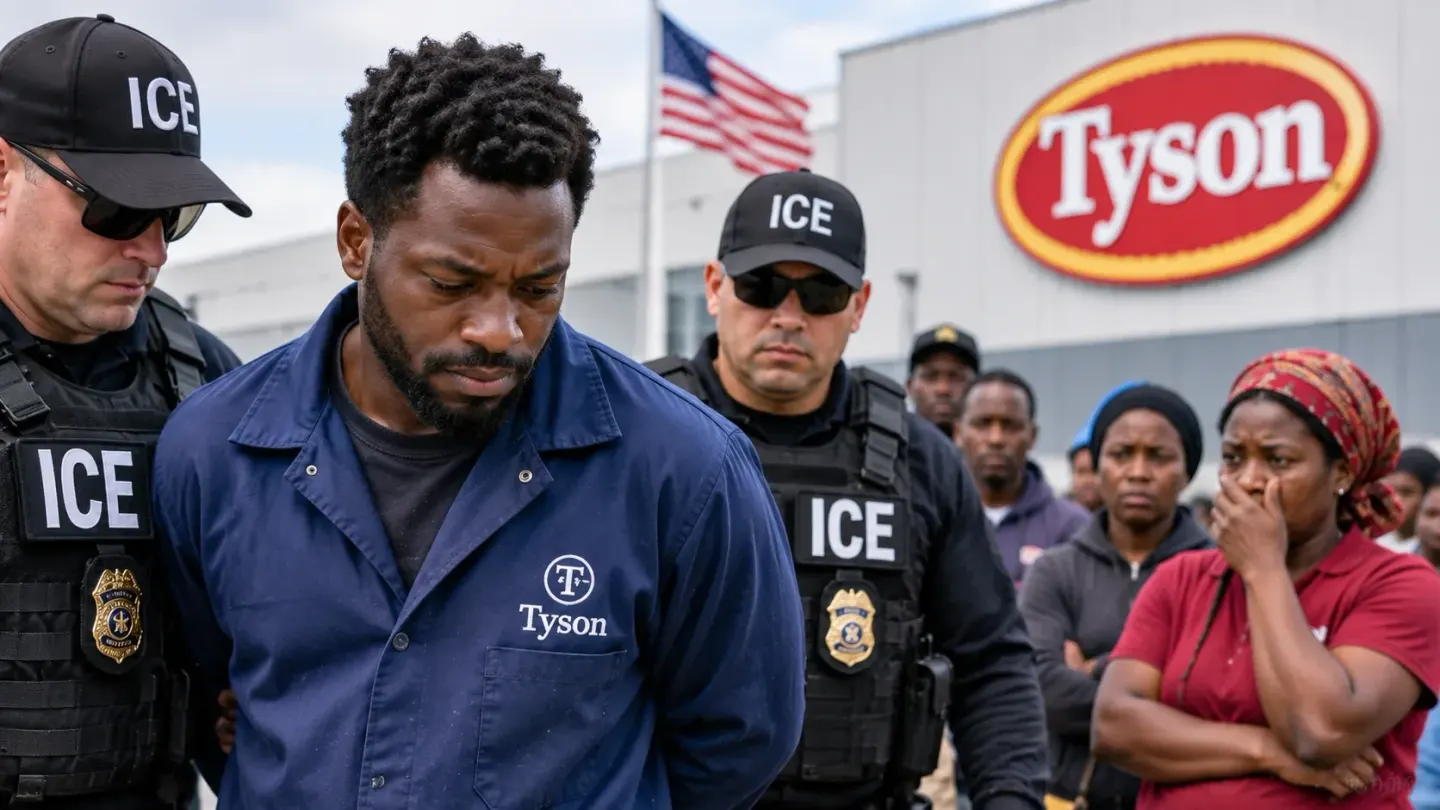
The situation came into focus when Immigration and Customs Enforcement (ICE) agents arrived at a Tyson Foods poultry processing facility and arrested Haitian worker Frandrich Pierre, triggering fear and concern among his colleagues.
Pierre, a Haitian asylum seeker who held a valid work permit, had been employed at Tyson Foods for approximately two years. He earned $21 an hour sorting chicken parts before his arrest. He was subsequently released and has an upcoming asylum hearing.
His case has become an example of the uncertainty facing Haitian immigrants following the US government's decision to revoke Temporary Protected Status (TPS) for Haitians.
Although many Haitian workers had been living and working legally in the United States, changes to immigration protections and increased enforcement activity have created fears of detention and deportation. As a result, some employees have stopped attending work, while others have reportedly gone into hiding.
The impact is particularly visible across the Delmarva Peninsula, a region spanning Delaware, Maryland and Virginia that serves as a major poultry-processing hub for some of the country's largest food producers.
Companies operating in the region have historically depended on Haitian labor to maintain their processing operations. Some employers have also supported workers through employment-based immigration arrangements, including assistance with work visas and permanent residency applications.
However, the administration's efforts to increase deportations have disrupted this established workforce. Poultry companies are now facing difficulties filling vacant positions, recruiting replacements and training new employees.
The consequences extend beyond poultry processing facilities.
Local healthcare providers who have spent years treating poultry workers are also reporting significant changes in their patient numbers. Emanie Dorvail, who has provided medical care to poultry employees suffering workplace injuries, says many of her patients have stopped seeking treatment because they fear being arrested by ICE.
The decline in patient visits has created serious financial difficulties for her clinic. With fewer workers seeking medical assistance, Dorvail is considering closing what was previously her busiest healthcare facility because she can no longer afford its operating expenses.
The situation highlights how immigration enforcement can affect entire local economies, extending beyond the workers directly targeted by arrests.
Concerns are also growing about the potential impact on the broader US food supply. A coalition of food industry organizations recently warned President Trump that the administration's immigration crackdown was affecting the nation's food production system.
Although ICE has not conducted enforcement operations inside the poultry processing plants described in the report, workers told The New York Times that companies have been scrambling to recruit and train employees to fill positions left vacant in recent months.
Major poultry producers, including Tyson Foods, Perdue and Mountaire, have been linked to the region's labor challenges. None of the three companies agreed to comment on the specific impact of ICE enforcement on their operations.
Tyson Foods has, however, provided letters for some employees to carry with them when traveling to work. The letters ask law enforcement officers to allow the company's employees to continue reporting to their jobs, emphasizing that their work is essential to Tyson's ongoing operations.
The company's decision reflects concerns about the uncertainty surrounding its immigrant workforce and the potential consequences of further employee absences.
Meanwhile, tensions have prompted protests in Salisbury, Maryland, where residents have criticized poultry companies for not doing enough to protect their immigrant employees.
Community members argue that businesses benefiting from immigrant labor should take greater responsibility for supporting workers facing immigration-related uncertainty.
ICE did not respond to The New York Times' requests for comment regarding the arrest of Frandrich Pierre, Tyson Foods' employment letters or allegations that immigration enforcement activities are affecting the food industry.
The controversy also raises humanitarian concerns about the deportation of Haitian immigrants to a country already experiencing a severe crisis.
Haiti continues to face significant political instability, violence and economic difficulties, making the prospect of returning deported individuals particularly concerning for immigrant communities and their supporters.
The developments illustrate the complicated relationship between immigration policy, labor availability and the American food industry. While the Trump administration continues its efforts to increase immigration enforcement and deportations, businesses and local communities are confronting the economic and social consequences.
For the poultry industry, the growing absence of Haitian workers could create lasting workforce challenges. For healthcare providers and small businesses, declining customer numbers threaten financial stability. And for Haitian families, the fear of detention and deportation has created uncertainty over their ability to work, access essential services and remain together in the United States.
The situation on the Delmarva Peninsula demonstrates how immigration enforcement can extend far beyond individual arrests, potentially affecting food production, local economies and the communities that depend on immigrant workers.



تبصرے
مفت اکاؤنٹ بنا کر بحث میں شامل ہوں۔
تبصرے لوڈ ہو رہے ہیں…