

Russia Seizes Hundreds of Ukrainian Hotels and Resorts Along the Sea of Azov Coast
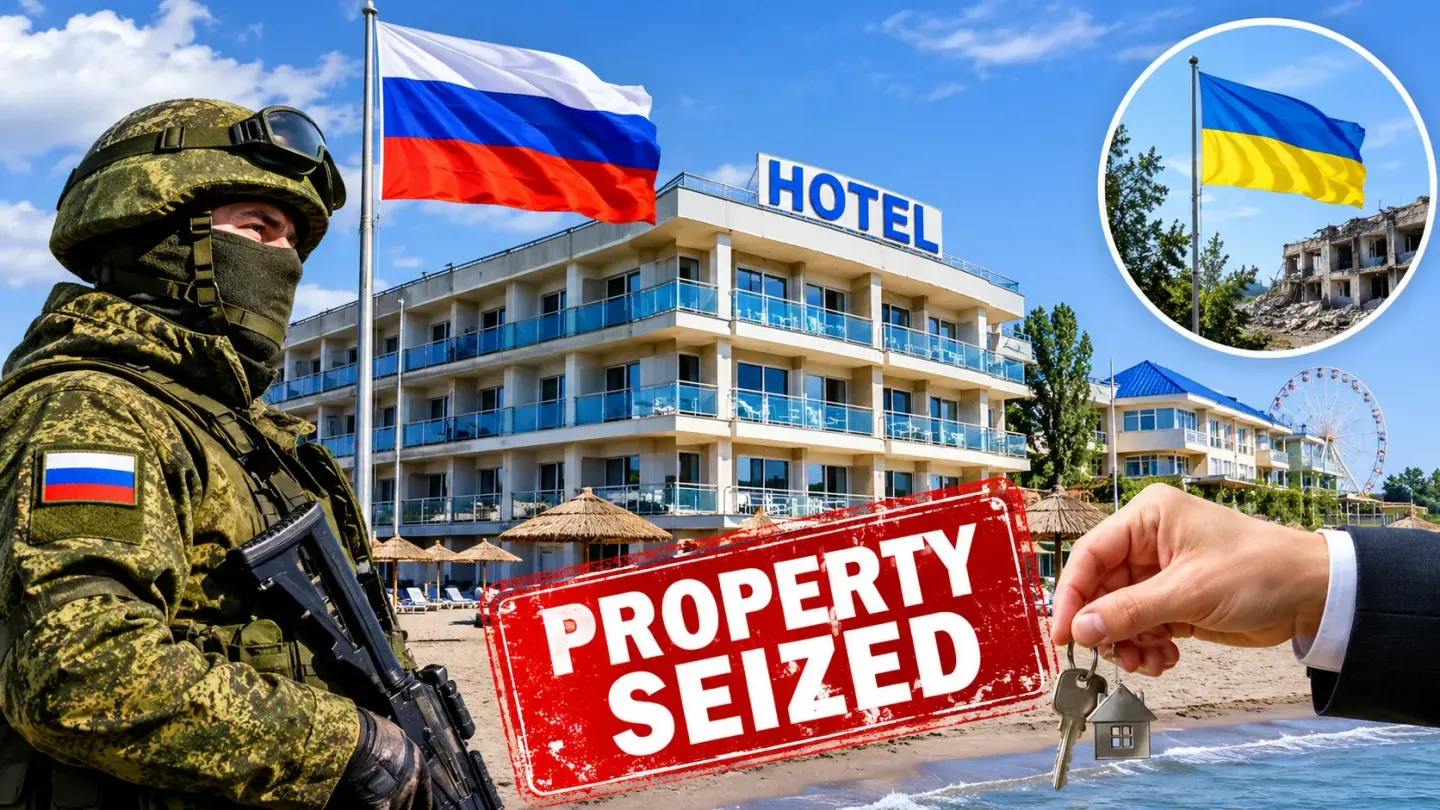
Russia has taken control of hundreds of Ukrainian hotels and resorts along the Sea of Azov coast in occupied territories, with a Reuters investigation revealing how properties once owned by Ukrainian businesses are being reclassified as “ownerless” and transferred to Russian operators.
According to the investigation, at least 521 hotels and resorts have been listed as “ownerless” by Russian-installed authorities in occupied Ukrainian territories. Of these, at least 77 are now under the control of Russian businesses, including 20 reportedly taken over by a Russian state entity.
The investigation highlights the cases of two resorts, the Admiral and the Pearl of Tavria, located in Kyrylivka in Ukraine's occupied Zaporizhzhia region. Both properties were previously operated by Ukrainian owners and served as popular family holiday destinations before Russia launched its full-scale invasion in February 2022.
Dennis Kaduk, the owner of the Admiral Hotel, is now living in Germany after fleeing Ukraine following the Russian invasion. Although he remains unable to return to his property, videos circulating on social media show tourists visiting the resort under Russian control.
Before the war, Kyrylivka was a major summer tourism destination, attracting approximately two million visitors in 2021. Local hotels, including the Admiral and the Pearl of Tavria, were known for family entertainment, swimming pools and holiday activities.
However, the situation changed after Russian military forces entered Kyrylivka on March 25, 2022. Russian soldiers reportedly entered the Pearl of Tavria hotel several months later and informed staff that the property would reopen under new management.
On September 19, 2022, both hotels were added to a list of properties classified as “ownerless” by the Russian-installed administration. Under the process described in the investigation, property owners were required to present ownership documents and passports at Russian-controlled government facilities within three days of a property being provisionally listed. Properties whose owners failed to complete the process could subsequently be registered as state-owned.
The investigation found that at least 7,000 properties in occupied Zaporizhzhia had been classified as “ownerless,” including residential homes and businesses. Many of the properties reportedly still have Ukrainian owners who have been unable to return because of the war.
Business records reviewed by investigators show that the Pearl of Tavria is now operated by a Russian company called Magnet. Between 2023 and 2025, the company was owned by Alexander Bolitsky, the son of the Russian-installed head of occupied Zaporizhzhia. It is now reportedly co-owned by a Russian travel agency and a real estate company.
The Ukrainian company that previously operated the Pearl of Tavria said Russia seized the hotel in 2022 and that it had never transferred ownership or given permission for the property to be operated by Russian authorities or businesses.
Meanwhile, Russian tourism operators and social media accounts have increasingly promoted the seized resorts to Russian-speaking holidaymakers. Videos show tourists visiting swimming pools, enjoying hotel facilities and attending events at properties that previously belonged to Ukrainian businesses.
Russian-language websites and promotional accounts have also been created for the Admiral and the Pearl of Tavria. Ukrainian signs and flags have been replaced with Russian-language branding and Russian national symbols, while local commemorations have increasingly been replaced by Russian holidays.
The promotion campaign has expanded beyond individual tourists. In September 2025, a Russian tour operator organized a trip for bloggers to showcase tourism opportunities along the Sea of Azov coast. The itinerary included several occupied Ukrainian destinations, with 10 promoted hotels in the Zaporizhzhia region having previously appeared on lists of properties classified as “ownerless.”
Despite these efforts, the tourism industry in the occupied region continues to face major challenges. A tourism development plan published by the Russian-installed administration reported approximately 150,000 visitors to the region in 2025. That figure represents only around five percent of the combined tourist numbers reported for Kyrylivka and Berdyansk in 2021, according to the investigation.
The ongoing war has also raised security concerns for the region's tourism sector. In July, a resort in Kyrylivka was hit in an incident that Russian occupation authorities described as a Ukrainian strike. Local occupation officials said 12 people, including four children, were killed. The area could not be independently visited by Reuters because of security concerns.
The investigation also found that attempts to revive tourism have been affected by drone attacks and continuing security risks. When investigators attempted to book a room at the Admiral in July 2026, a booking chatbot for the tourism region indicated that the hotel was not open for the 2026 summer season.
Russia's takeover of Ukrainian coastal properties has raised wider concerns about property confiscation in occupied territories and possible violations of international humanitarian law. The findings illustrate how the occupation is affecting not only residential communities but also local businesses, tourism infrastructure and the livelihoods of Ukrainian property owners.
For former owners such as Dennis Kaduk, the future of their businesses remains uncertain, as hotels that once welcomed Ukrainian families are now being promoted and operated under Russian control.



Comments
A free account lets you join the discussion.
Loading comments…