

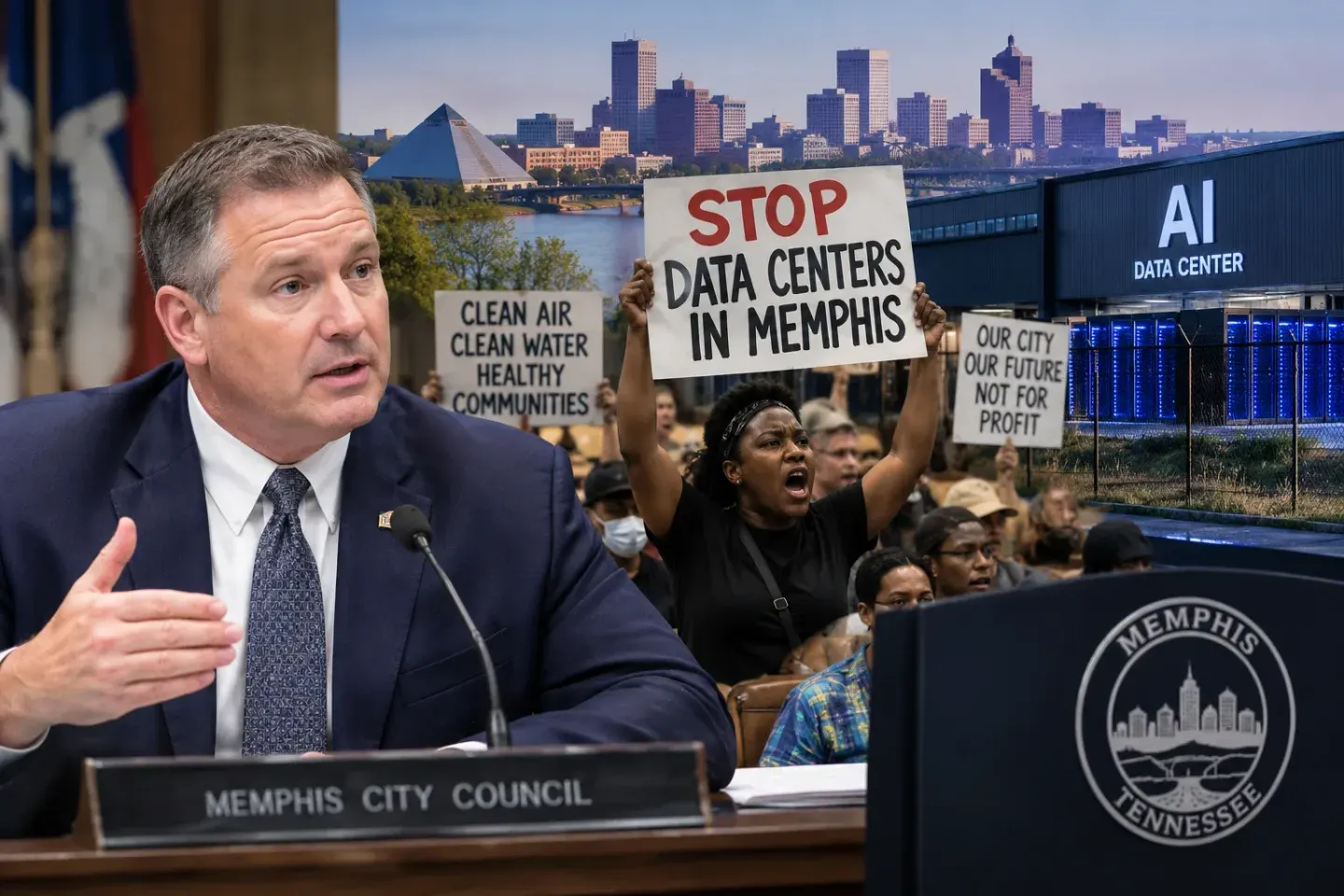
Memphis, Tennessee, is facing growing public opposition to artificial intelligence (AI) data center development as residents raise concerns about air pollution, water consumption, environmental risks and the impact of large computing facilities on surrounding communities. The debate has intensified following a city council decision to reject a proposed 12-month moratorium on new data center development while approving a shorter, 135-day pause intended to help establish regulations for the industry.
The controversy highlights a growing national debate over the rapid expansion of AI infrastructure in the United States, as communities weigh the economic opportunities created by technology investments against concerns about environmental protection and the quality of life for local residents.
During an interview on Fox News, Memphis City Councilman Jeff Warren defended the council's decision, explaining that the city needs a practical and legally defensible approach to regulating data center development. Warren said the primary objective is to establish rules that allow Memphis to benefit from advances in artificial intelligence without exposing residents to unnecessary environmental risks.
According to Warren, the city previously lacked sufficient local regulations to manage the location and expansion of these facilities effectively. He argued that the temporary period would give officials time to examine how zoning regulations could be used to guide future development and establish appropriate requirements for operators.
The decision has generated strong reactions from residents who attended the city council meeting to express their opposition. Several community members raised concerns about local air quality, potential health effects and the environmental consequences of operating energy-intensive computing facilities near residential neighborhoods.
One resident argued that community members had repeatedly raised concerns about deteriorating air quality, while another called for a pause in data center development until officials could better understand the potential risks. Other speakers emphasized that a temporary moratorium would give the city time to study the consequences of large-scale AI infrastructure projects before approving additional developments.
The public reaction demonstrates the growing tension between technological progress and environmental concerns as AI companies expand their computing capacity across the country.
Warren acknowledged the intensity of the debate but maintained that establishing regulations quickly would be more effective than imposing a blanket ban on the industry. He warned that a 12-month moratorium could expose the city to legal challenges, particularly if developers argued that officials lacked the authority to suspend an entire industry for an extended period.
He also noted that major technology companies have substantial financial resources to challenge local government decisions in court. In his view, a defined period for developing zoning rules would allow Memphis to address residents' concerns while providing businesses with clearer expectations about where and how data centers could operate.
One of the central points of controversy is the expansion of the Colossus AI supercomputer facility associated with Elon Musk's artificial intelligence company, xAI. The facility is part of the broader effort to develop computing infrastructure capable of supporting advanced AI systems, including the Grok chatbot.
During the interview, Musk's comments about spending significant time in Memphis to bring the supercomputing cluster online were discussed as an indication of the importance of the project to his company's technological ambitions.
The expansion of AI computing facilities has become increasingly important as technology companies compete to develop more powerful AI models. These operations require substantial computing capacity, reliable electricity supplies and cooling systems, placing additional demands on local infrastructure.
For Memphis, the challenge is determining how to accommodate such investments while addressing questions about energy consumption, water resources, pollution and the proximity of industrial facilities to schools and residential areas.
Warren said the city wants technology companies to invest in Memphis but believes developers must operate under clear local rules. He argued that data centers should not be placed in locations that could create avoidable risks for nearby communities or threaten local environmental resources.
The councilman's position reflects an effort to balance economic development with public accountability. While AI infrastructure can bring investment and support the growth of technology-related industries, residents and local officials increasingly want assurances that the benefits will not come at the expense of public health or environmental sustainability.
The 135-day regulatory pause is intended to provide officials with time to examine zoning options and determine how future data center proposals should be evaluated. The resulting rules could help establish suitable locations for new facilities and clarify the conditions developers must meet before proceeding with projects.
The controversy in Memphis also reflects a broader national discussion about the regulation of AI data centers. As demand for artificial intelligence services increases, communities across the United States are examining how large computing facilities affect electricity demand, water use, local infrastructure and nearby neighborhoods.
The outcome of Memphis's regulatory process could influence how the city manages future technology investments and responds to residents' environmental concerns.
For now, the central question remains whether Memphis can establish effective safeguards without discouraging investment in a rapidly expanding industry. City officials face pressure to respond to public concerns while ensuring that regulatory decisions are legally sustainable and provide businesses with predictable operating conditions.
As the debate continues, the proposed regulations will be closely watched by residents, technology developers and other communities confronting similar challenges. The decisions made over the coming months could help determine how Memphis balances AI innovation, economic growth and environmental protection.




Comments
A free account lets you join the discussion.
Loading comments…