

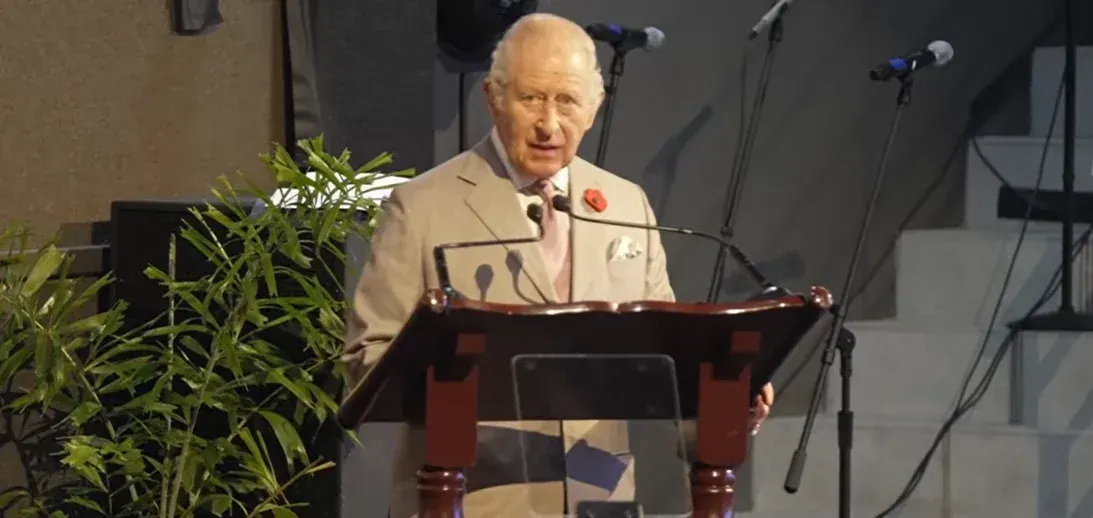
King Charles has addressed the controversial legacy of British colonialism and the transatlantic slave trade during his latest speech at the Commonwealth Heads of Government Meeting (CHOGM), acknowledging the painful history while stopping short of issuing a formal apology for slavery or promising financial reparations.
Speaking before Commonwealth leaders, the King reflected on the complex history shared by member nations, recognizing that their historical experiences may differ but that understanding the past is essential to building a stronger future. He acknowledged that the transatlantic slave trade continues to cast a shadow over Caribbean nations and other Commonwealth countries.
Describing slavery as a shameful chapter in history, King Charles expressed deep sorrow over the suffering associated with the historical trade. He also spoke about his personal commitment to understanding the issue, saying that listening, learning and looking at history more closely had strengthened his determination to find ways to address the wrongs of the past.
The King's remarks represented a significant moment in the ongoing conversation about Britain's colonial history and its impact on countries that were once under British rule. However, despite acknowledging the suffering caused by slavery, he did not deliver the formal apology that campaigners and some Caribbean leaders have been seeking.
During his address, King Charles emphasized the importance of moving forward through practical partnerships rather than allowing historical disagreements to prevent cooperation. He highlighted education, employment opportunities, international trade, investment and climate action as important areas where Commonwealth nations could work together to address inequalities and create opportunities for future generations.
He also stressed the importance of supporting young people and disadvantaged communities, while encouraging greater investment in sustainable development and economic growth.
Climate change was another major focus of the King's speech. He warned that environmental challenges are becoming increasingly serious, particularly for small island nations in the Caribbean that face significant risks despite contributing relatively little to global emissions. He called for stronger climate financing, investment in renewable energy, sustainable agriculture and initiatives to protect natural ecosystems.
The King also highlighted the Commonwealth's potential to strengthen international trade, improve digital connectivity and create new opportunities for businesses across member countries.
Following the speech, royal commentators described the address as stronger and more personal than some of the King's previous remarks on slavery and colonialism. They noted that he directly acknowledged the historical suffering caused by the transatlantic slave trade, although the question of a formal apology and financial compensation remains unresolved.
The issue of slavery reparations continues to divide opinion within the Commonwealth. Caribbean nations have called for meaningful discussions about historical responsibility, including formal apologies and financial compensation. Some campaigners argue that acknowledging the past must be accompanied by concrete action to address the lasting economic and social consequences of slavery.
However, the British government's position remains that it will not provide financial reparations. The distinction between the King's personal engagement with the issue and the government's position on compensation remains an important part of the wider debate.
King Charles's speech therefore highlighted both the progress and the limitations of Britain's approach to confronting its colonial past. While his acknowledgment of slavery's devastating consequences may encourage further dialogue, the absence of a formal apology leaves important questions unanswered.
As Commonwealth leaders continue discussions about their shared history and future priorities, the debate over colonialism, slavery and reparations is likely to remain a significant issue in relations between Britain and Caribbean nations.




Comments
A free account lets you join the discussion.
Loading comments…