

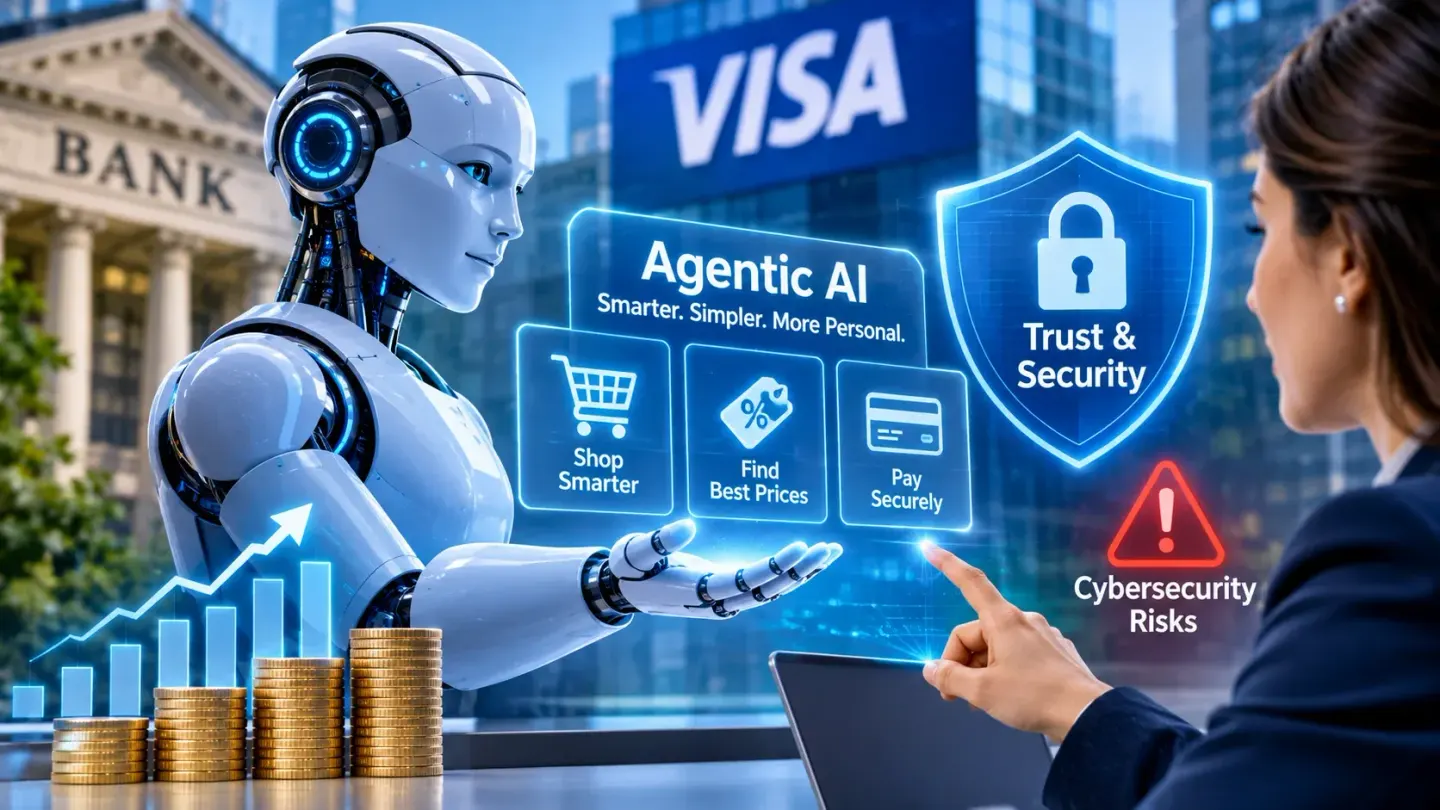
Finance leaders are increasingly recognizing the potential of agentic artificial intelligence (AI) to transform financial services and online commerce, but concerns over cybersecurity, fraud and customer trust remain major challenges to its widespread adoption.
AI agents, which have evolved from simply answering questions to performing tasks on behalf of users, are emerging as a significant development in the digital economy. These systems can assist customers with financial discovery, shopping and other commerce-related activities, potentially simplifying complex processes and reducing the effort required to make purchasing decisions.
Industry experts say the rapid emergence of personal AI agents marks a shift in how consumers interact with financial services and e-commerce platforms. By handling multiple tasks independently, agentic AI could significantly reshape the online shopping experience and make transactions more convenient for customers.
Price discovery is also expected to play a major role in accelerating adoption. According to finance industry leaders, lower- and middle-income consumers may be among the earliest adopters because they are particularly sensitive to prices and actively seek more efficient ways to compare products and services. Rather than technological novelty alone, the ability to identify the best prices and save money could become a key factor driving consumer interest in AI-powered agents.
However, the growing use of autonomous AI systems also introduces serious security concerns. Experts warn that hackers could compromise AI agents in ways similar to attacks on personal devices, potentially using them to carry out fraudulent activities or unauthorized financial transactions.
These risks have prompted several major banks to restrict AI agents from independently performing sensitive financial operations, including account transfers and payments on behalf of customers. Financial institutions remain cautious about allowing autonomous systems to access customers' money without stronger security measures and reliable safeguards.
Trust is therefore emerging as a critical requirement for the future of agentic commerce. Experts emphasize that consumers will only embrace AI agents for financial transactions when they are confident that the underlying security architecture can protect their accounts and prevent unauthorized activity.
To address these challenges, Visa is working on frameworks designed to establish safeguards for AI-powered commerce. Its Visa Intelligent Commerce framework and Trusted Agent Protocol are intended to help define security standards and establish boundaries for how AI agents interact with financial services and conduct transactions.
As agentic AI continues to develop, financial institutions face the challenge of balancing convenience and automation with security and accountability. While autonomous agents could fundamentally change online shopping, financial discovery and digital payments, their long-term success will depend on building systems that consumers and banks can trust.




Comments
A free account lets you join the discussion.
Loading comments…