

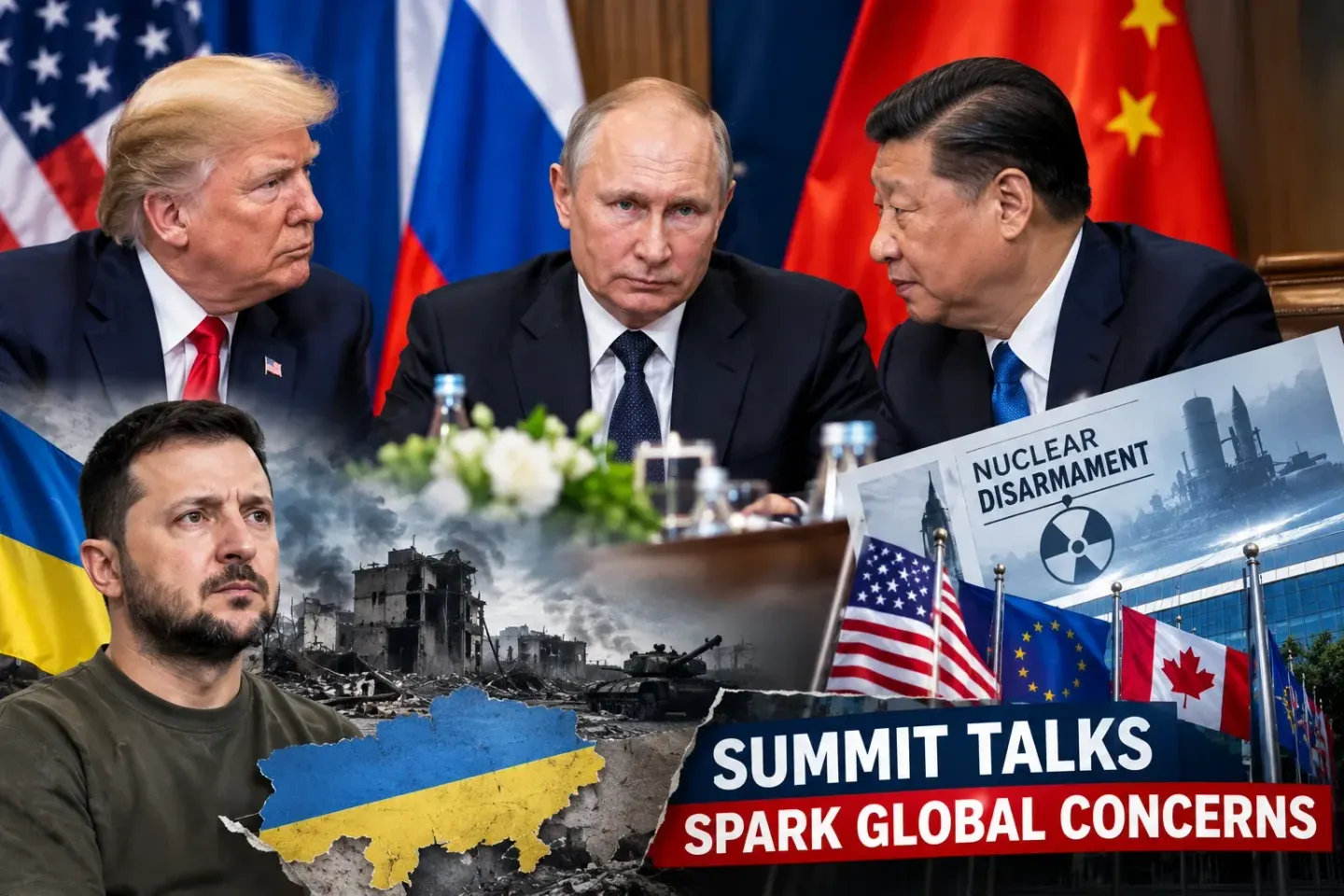
U.S. President Donald Trump’s willingness to meet Russian President Vladimir Putin and Chinese President Xi Jinping has sparked debate over the risks of a potential three-way summit, with foreign policy experts warning that discussions on Ukraine could undermine Washington’s strategic position if European allies and Kyiv are excluded.
In remarks discussed during a Fox News segment, Trump indicated that he would be willing to hold bilateral meetings with Putin and Xi. He suggested that nuclear disarmament could provide a reason for discussions with the Chinese leader and the Russian president, while the possibility of addressing the war in Ukraine and trade issues has also emerged as a major point of interest.
However, Rebecca Heinrichs, a senior fellow at the Hudson Institute and a Fox News contributor specialising in nuclear security, warned that the purpose and format of any summit would be critical. She argued that a meeting focused on nuclear weapons could provide an opportunity to address growing security challenges, particularly China's expanding nuclear capabilities and the strategic cooperation between Beijing and Moscow.
Heinrichs cautioned that a direct discussion about Ukraine involving Trump, Putin and Xi could be a serious mistake if it sidelined Ukraine and its European partners. She drew a comparison with the Yalta-style approach to international diplomacy, arguing that decisions concerning Russia's actions in Europe should involve the United States, European allies and Ukraine rather than being determined through negotiations among major powers alone.
The debate comes amid concerns in Washington about growing cooperation between Russia, China and Iran. During the discussion, Heinrichs argued that Moscow and Beijing have supported Tehran and that their cooperation poses wider challenges to American interests in Europe and the Middle East. She also pointed to allegations that Russia has provided targeting assistance used by Iran in attacks against American interests in the Gulf region.
Republican Senator Thom Tillis also voiced strong criticism of the prospect of a summit involving Trump, Putin and Xi. In remarks featured in the broadcast, Tillis accused Putin of manipulating the American president and argued that a meeting involving the Russian and Chinese leaders could send the wrong signal about Washington's commitment to defending Western interests.
Tillis's criticism reflects broader concerns among some Republican lawmakers about the administration's approach to Russia, Ukraine and sanctions. The discussion also referenced opposition among Republican senators to certain proposed policy changes involving Russia and legislation related to sanctions. The precise legislative measures and the number of lawmakers involved were not independently established in the broadcast transcript.
Trump's approach to the war in Ukraine was another major focus of the discussion. The president criticised Ukrainian President Volodymyr Zelenskyy, arguing that the conflict should have been settled earlier and suggesting that it might be time for someone else to negotiate on Ukraine's behalf. Trump also questioned the progress of negotiations and argued that relatively little territory had changed hands.
Heinrichs pushed back against the suggestion that Zelenskyy alone was responsible for the lack of progress. She argued that Ukraine's political circumstances and the ongoing war must be considered when assessing the country's leadership and its ability to hold elections. She also maintained that Russia's military campaign extends beyond Ukrainian government positions, citing attacks on energy infrastructure and American businesses operating in Ukraine.
The discussion highlighted the challenge facing Washington as it attempts to pursue diplomatic negotiations while maintaining pressure on Moscow. Heinrichs argued that closer coordination with European governments and Ukraine would strengthen the United States' position and improve the prospects of reaching an agreement. In her view, Russia would need to face sufficient pressure before meaningful progress towards ending the war could be achieved.
Meanwhile, the conversation touched on diplomatic engagement between U.S. Secretary of State Marco Rubio and Zelenskyy. According to the statements discussed in the programme, their conversation covered ballistic missile interception, early-warning systems and the situation involving Starlink and Starshield, highlighting the continuing importance of military technology and communications support to Ukraine.
The possibility of a Trump-Putin-Xi summit therefore raises questions extending well beyond a single diplomatic meeting. Nuclear security, the war in Ukraine, U.S.-China competition, sanctions against Russia and Iran's regional activities are all interconnected issues that could shape the discussions.
For the United States, the central challenge will be balancing direct engagement with rival powers against the need to maintain confidence among its allies. While a summit could create opportunities for dialogue on nuclear weapons and international security, critics warn that negotiations over Ukraine without Kyiv and European participation could weaken the Western position.
No final outcome from a potential three-way summit has been established in the material provided. The debate instead underscores the divisions over how Washington should approach Moscow and Beijing while seeking an end to the war in Ukraine and addressing growing international security concerns.




تبصرے
مفت اکاؤنٹ بنا کر بحث میں شامل ہوں۔
تبصرے لوڈ ہو رہے ہیں…