

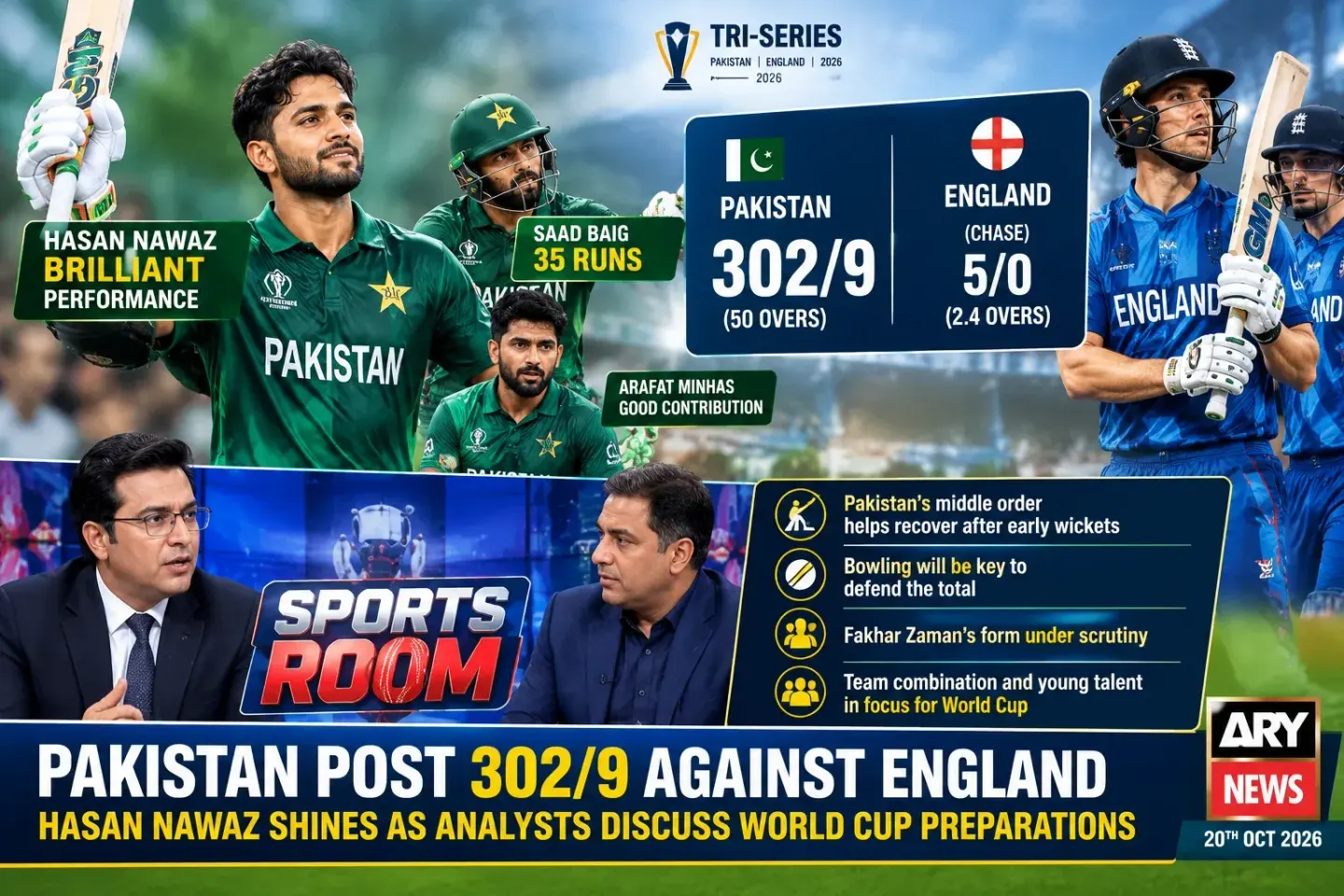
Pakistan posted a competitive total of 302 for nine against England in the tri-series on October 20, 2026, with Hasan Nawaz delivering an impressive batting performance and young wicketkeeper-batter Saad Baig making a valuable contribution. The innings provided Pakistan with an opportunity to put pressure on England, while also offering selectors important insights into the team's preparations for the upcoming ICC Cricket World Cup.
After winning the toss, England elected to field first, putting Pakistan into bat. Pakistan's innings experienced setbacks at the top of the order, but the middle order responded strongly to help the team reach 302 runs in 50 overs. Hasan Nawaz was among the standout performers, while Saad Baig's contribution of 35 runs proved important in building a competitive total. Arafat Minhas also impressed with his performance, helping Pakistan recover after losing early wickets.
Speaking on ARY News' Sports Room, host Najeeb-ul-Hasnain and cricket analyst Tausif discussed Pakistan's batting display and the team's chances of defending the total. The discussion highlighted how the middle order had helped Pakistan recover from a difficult position and shift the pressure onto England.
The analysts suggested that 302 was a substantial target, although the pitch conditions and the possibility of dew later in the match could influence the chase. They stressed that Pakistan would need to take two or three early wickets to put England under pressure and prevent the opposition's experienced batters from settling into their innings.
Pakistan's bowling performance was identified as a decisive factor. England possess several capable batters who can change the course of a match, making early breakthroughs particularly important. The panel expressed optimism about Pakistan's chances but emphasised that disciplined bowling and effective execution would be essential to defend the total.
The programme also raised concerns about the recent form of Fakhar Zaman. Although the left-handed batter has produced impressive performances in one-day international cricket, the analysts questioned whether he was currently playing with the confidence and consistency expected of him. His record against England, as discussed during the programme, included 357 runs in 12 matches, with a highest score of 138.
The discussion focused on the need for Fakhar to improve his strike rotation and expand his range of scoring options. The analysts argued that modern limited-overs cricket requires batters to score around the ground rather than depend too heavily on a narrow selection of shots. They also suggested that maintaining concentration and adapting to different match situations would be crucial to his return to form.
Pakistan's team combination was another major topic, particularly with the tri-series serving as preparation for the next World Cup. The analysts cautioned that it was too early to make definitive judgments about the ideal playing XI, especially with several younger players receiving opportunities to demonstrate their abilities.
Saad Baig attracted particular attention following his contribution with the bat. The young player, who has represented Pakistan at the Under-19 level, was praised for his confidence and potential. However, the panel noted that he would need further opportunities to establish himself at the international level and demonstrate consistency against stronger opposition.
Wicketkeeping also featured prominently in the discussion. The analysts stressed that Pakistan needed a dependable wicketkeeper capable of performing consistently behind the stumps. While batting contributions from the wicketkeeper are valuable, they argued that reliable glovework should remain the primary consideration when selecting a player for the role.
The panel also questioned the team's use of wicketkeeper-batter Khawaja Nafay in different batting positions, suggesting that selectors and team management should provide greater clarity regarding player roles. Establishing a settled combination, particularly in the middle order and wicketkeeping department, was described as an important part of Pakistan's World Cup preparations.
Overall, Pakistan's total of 302 for nine gave the team a strong platform against England, with the middle order demonstrating its ability to recover after early setbacks. However, the outcome depended on whether Pakistan's bowlers could exploit the pressure of the chase and take wickets at regular intervals.
The tri-series represents an important opportunity for Pakistan to assess emerging talent, address weaknesses in the batting order and finalise its team combination. Performances from players such as Hasan Nawaz, Saad Baig and Arafat Minhas could influence future selection decisions as Pakistan continues to prepare for major international competitions.




تبصرے
مفت اکاؤنٹ بنا کر بحث میں شامل ہوں۔
تبصرے لوڈ ہو رہے ہیں…