

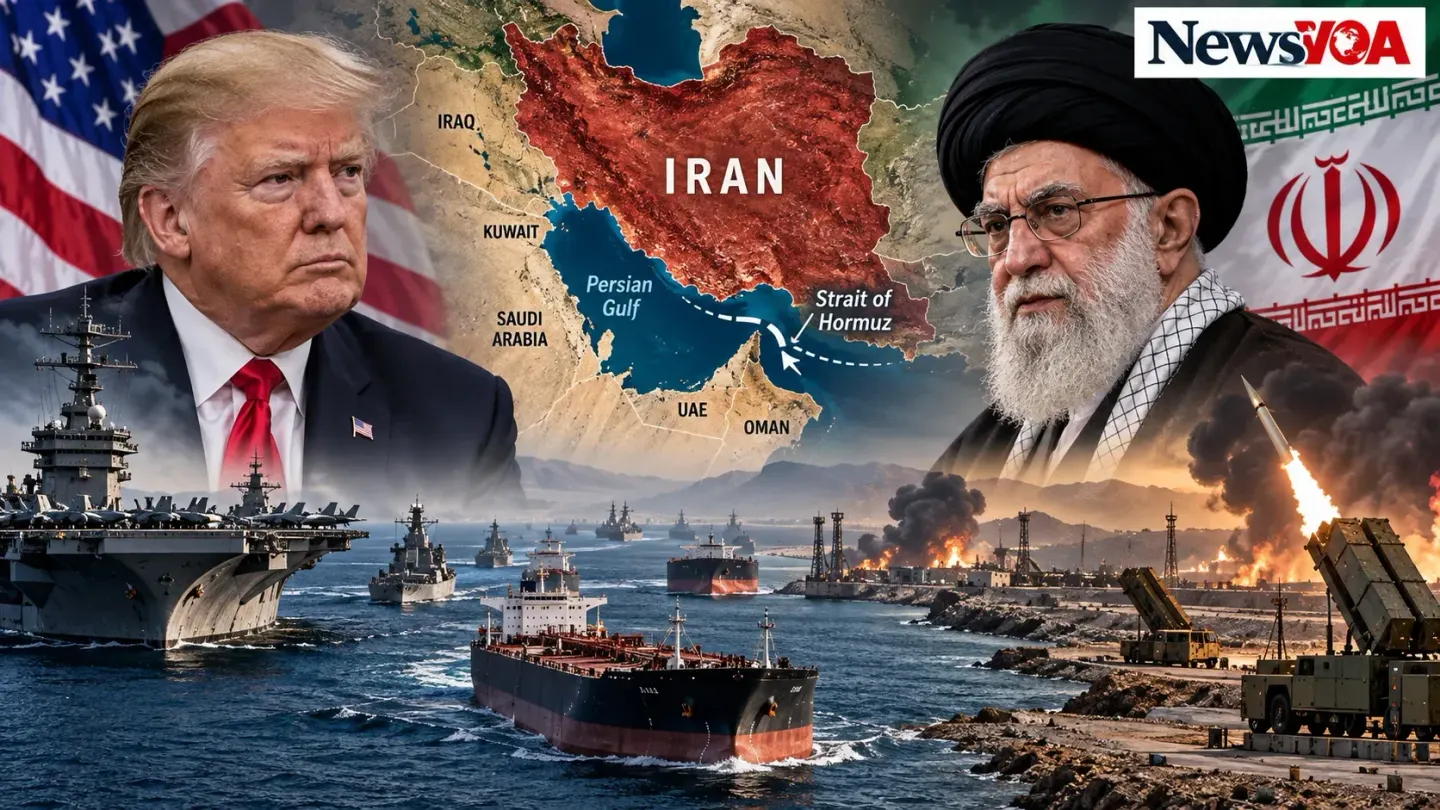
Iran has issued a fresh warning to the United States, threatening potential attacks on American military bases in the region as Washington continues efforts to secure maritime traffic through the strategically important Strait of Hormuz. The warning comes amid rising tensions between Tehran and Washington, reports of possible renewed US-Israeli military strikes against Iran, and growing uncertainty over whether diplomatic negotiations can prevent another round of conflict.
The latest developments were discussed on Fox News, where contributors examined Iran's military capabilities, the impact of US economic pressure and the possibility of a new military campaign after the November midterm elections.
According to the broadcast, Iran has warned of retaliation against American forces if the United States continues operations affecting Iranian interests in the Gulf region. The threat comes as US military forces seek to maintain shipping access through the Strait of Hormuz, a critical passage for global energy supplies.
The Strait of Hormuz remains a major strategic concern because of its importance to international oil transportation. Any escalation involving Iran, American forces or regional allies could disrupt shipping, increase maritime insurance costs and create additional volatility in global energy markets.
The discussion also focused on reporting by The New York Times that the United States and Israel were developing options for renewed strikes against Iran following the US midterm elections. Potential targets reportedly under consideration could include energy infrastructure, nuclear facilities and additional military assets.
Such plans, if pursued, could mark a significant escalation in the confrontation. However, the existence of reported military planning does not confirm that a final decision to launch attacks has been made.
Rebeccah Heinrichs, a Fox News contributor, argued that Washington currently has significant military leverage in the region. She said the United States had demonstrated its ability to protect maritime traffic and weaken Iranian military capabilities during the conflict.
Heinrichs suggested that the period following the November elections could become an important moment for US decision-making. She also pointed to the reported movement of an additional American aircraft carrier toward the region, describing the military deployment as a factor that could influence future operations.
The timing and scale of any potential military action remain uncertain. Military deployments can serve several purposes, including deterrence, protection of shipping, support for regional allies and preparation for possible combat operations.
During the discussion, Heinrichs argued that earlier US military operations had significantly degraded Iran's naval capabilities and affected facilities associated with its missile programme and the Islamic Revolutionary Guard Corps (IRGC). These assessments were presented during the broadcast and would require independent verification to establish the full extent of the damage.
The IRGC plays a central role in Iran's military and regional security strategy. Its capabilities, including missile systems, drones and maritime operations, remain important factors in assessing the risks of renewed confrontation in the Gulf.
Another major issue is the impact of American sanctions and restrictions on Iranian oil exports. The Fox News discussion highlighted claims that US actions against vessels associated with Iran's so-called shadow fleet had sharply restricted Tehran's ability to sell oil internationally.
The shadow fleet refers to vessels used to transport oil under arrangements that can obscure ownership, origin or other shipping details. Restrictions on these networks can make Iranian oil exports more difficult and expensive, potentially reducing revenue available to the Iranian government.
The broadcast also highlighted images and claims concerning oil tankers at Kharg Island, an important Iranian oil-export hub. Heinrichs argued that restrictions on tanker movements had limited Iran's ability to generate revenue from oil shipments. The extent of any disruption would need to be confirmed through independent shipping and energy-market data.
Economic pressure has become an important part of the broader US strategy toward Tehran. Washington hopes that limiting Iranian oil revenue and increasing financial pressure could encourage the Iranian leadership to accept diplomatic concessions.
However, economic pressure also carries risks. A government facing financial strain may become more willing to negotiate, but it may also respond through regional military activity or pressure on shipping routes. This uncertainty makes the relationship between sanctions and diplomacy difficult to predict.
Iranian Foreign Minister Abbas Araghchi has reportedly indicated that Tehran remains willing to consider diplomacy if the United States demonstrates a sincere commitment to building trust and reaching what Iran considers a fair settlement. He has also warned that choosing military confrontation over negotiations could produce further strategic setbacks for Washington.
These statements suggest that diplomatic channels have not necessarily been ruled out, even as both sides continue to exchange warnings and prepare military options. Nevertheless, substantial differences remain over sanctions, maritime security, Iran's military capabilities and the conditions required for a negotiated agreement.
The broadcast also raised concerns about the reported evacuation of some US personnel from Saudi Arabia. Heinrichs described the movement of military assets alongside personnel evacuations as a potential indicator of heightened operational risk.
Such measures can reflect precautionary security planning when officials believe the possibility of retaliation has increased. They do not, on their own, prove that an attack is imminent or that a decision to begin military operations has been made.
Saudi Arabia and other Gulf countries could face significant risks if tensions escalate further. Attacks against military facilities, energy infrastructure or airports could disrupt commercial activity, threaten civilian lives and increase pressure on regional governments to respond.
For international markets, the Strait of Hormuz remains one of the most important factors to monitor. A serious disruption to shipping could affect crude oil prices, transportation costs and energy security in countries dependent on Gulf exports.
The coming weeks may prove important for US-Iran relations as Washington weighs the effectiveness of economic pressure against the risks of renewed military action. Iran, meanwhile, faces the challenge of protecting its strategic interests while dealing with restrictions on its oil revenue and the possibility of further strikes.
For now, neither a new military campaign nor a diplomatic breakthrough can be considered certain. The direction of the crisis will depend on decisions made by Washington and Tehran, the security situation across the Gulf and whether both sides can identify conditions for negotiations before tensions escalate further.




تبصرے
مفت اکاؤنٹ بنا کر بحث میں شامل ہوں۔
تبصرے لوڈ ہو رہے ہیں…