

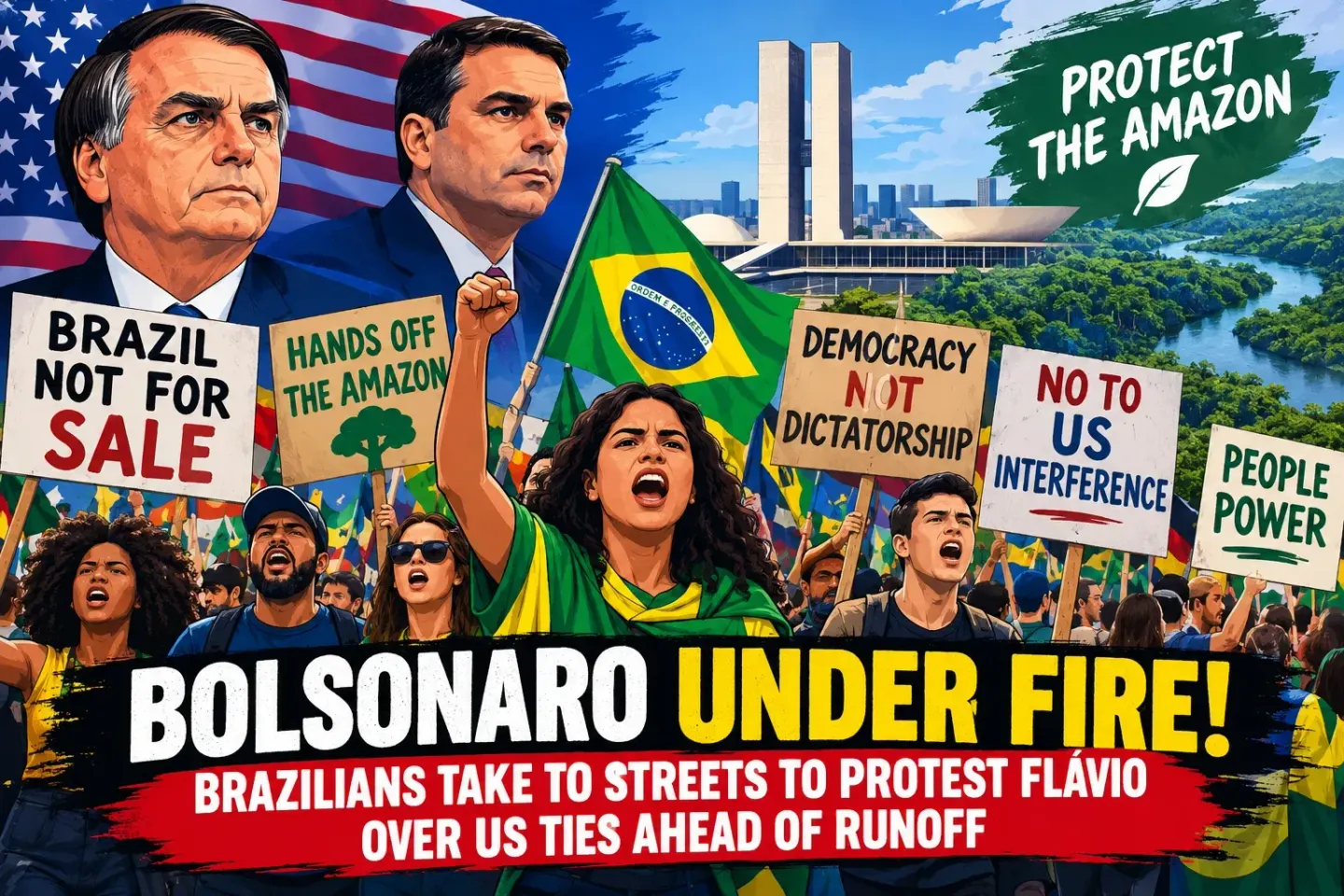
Brazil’s political tensions are intensifying as protesters raise concerns over US influence, social media censorship, economic inequality, and the future of the Amazon ahead of a crucial election runoff.
Brazil’s political landscape is facing renewed tensions as political activists and demonstrators voice opposition to the Bolsonaro political movement and its perceived ties to the United States. With the country’s electoral contest approaching a decisive stage, protesters are warning that the outcome could have significant consequences for Brazil’s economy, natural resources, democratic institutions, and broader relations across Latin America.
The controversy centers on concerns expressed by left-wing activists about the political influence of US President Donald Trump and the possibility that a Bolsonaro-led administration could strengthen Washington’s influence over Brazil’s strategic resources. The demonstrations also reflect broader divisions over economic policy, environmental protection, and the role of social media platforms in shaping political debates.
Protesters Warn Against US Influence in Brazil
During interviews featured in the report, demonstrators argued that Brazil’s elections represent more than a domestic political contest between President Luiz Inácio Lula da Silva’s political camp and conservative opponents. They described the election as part of a wider struggle over the political and economic future of Latin America.
One activist claimed that the region’s natural resources, including oil, rare-earth minerals, and valuable land, have become important factors in international political competition. According to the activist, stronger US influence over Brazil could threaten the region’s economic independence and control over its resources.
The protesters emphasized that their opposition was not simply about left-wing or right-wing politics. Instead, they presented their movement as a campaign to protect democratic institutions, economic opportunities, and Latin American sovereignty.
However, these statements represent the protesters’ political views and allegations rather than independently established evidence of a plan by the United States to control Brazil’s resources.
Bolsonaro Political Movement Faces Criticism
The Bolsonaro political movement remains a major point of division in Brazilian politics. Critics featured in the report accused the movement of favoring powerful economic interests and expressed concern that closer relations with the United States could affect Brazil’s policy independence.
They also warned that conservative economic policies could negatively affect employment, public resources, and opportunities for workers and young people.
The political debate reflects long-standing disagreements in Brazil over the role of government, social welfare, environmental regulations, and the country's position in international affairs.
While opponents have raised concerns about the influence of foreign interests, supporters of conservative politics have their own arguments regarding economic management, public security, and Brazil’s international partnerships. The election debate therefore remains closely tied to competing visions for the country’s future.
Social Media Censorship Allegations Raise Concerns
Another major issue highlighted in the report is the role of digital platforms in political campaigning. An activist associated with an online page claiming more than five million followers alleged that the page faced an attempt to have it taken down following a request attributed to Jair Bolsonaro.
The activist argued that digital platforms have become increasingly important in mobilizing supporters, spreading political messages, and reaching voters beyond traditional campaign events.
According to the interview, activists have expanded their efforts through street demonstrations and digital campaigning following the first round of voting. They also expressed concern that content moderation decisions and social media algorithms could influence the visibility of political messages.
The interview further accused major technology companies, including Meta, of favoring certain political movements. These allegations were presented by the speakers, and the report does not independently establish that the platforms deliberately manipulated election-related content to benefit particular candidates.
The controversy highlights a wider international debate over political advertising, content moderation, algorithmic transparency, and the responsibility of social media companies during elections.
Journalists and Activists Emphasize the Power of Digital Campaigning
The speakers also stressed the importance of journalism in connecting communities and amplifying the voices of younger activists and emerging political movements.
They argued that independent media coverage can help bring attention to concerns that might otherwise receive limited public exposure. At the same time, they acknowledged that political communication has become more challenging as campaigners compete for attention across increasingly crowded digital platforms.
One speaker questioned whether journalism could ever be entirely objective or impartial, reflecting an ongoing debate about political bias, editorial independence, and the role of journalists in democratic societies.
The discussion also highlighted the growing importance of online audiences, particularly among younger voters, who increasingly rely on digital platforms to access political information and participate in public debates.
Amazon Rainforest Becomes a Central Election Issue
Environmental protection emerged as another major theme in the protests. Activists warned that political decisions affecting the Amazon rainforest could have consequences far beyond Brazil’s borders.
The Amazon is one of the world's most important tropical rainforest ecosystems, supporting exceptional biodiversity, storing carbon, and influencing regional rainfall patterns. Its protection is therefore a significant concern for environmental organizations, scientists, Indigenous communities, and governments worldwide.
During the interview, protesters accused Bolsonaro-aligned political interests of prioritizing private economic interests over environmental protection. They expressed fears that policies encouraging commercial exploitation of the Amazon could cause long-term damage to the environment.
These claims reflect the concerns of the activists interviewed. The specific allegations regarding future plans to transfer or sell Amazon resources to private interests were not independently substantiated in the report.
Nevertheless, the future of the Amazon remains an important issue in Brazilian politics, particularly as the country balances economic development, resource extraction, Indigenous rights, and environmental conservation.
Activists Call for Continued Mobilization After the Election
The demonstrators argued that political participation should not end when the election results are announced. They called on workers, women, young people, and community organizations to remain engaged in political life regardless of which candidate ultimately prevails.
One activist warned that a Bolsonaro political victory would not necessarily end opposition to his movement, arguing that organized civic participation could continue to challenge policies viewed as harmful to democratic and social interests.
The comments underline the importance of grassroots mobilization in Brazil, where political polarization has shaped public debate over economic priorities, environmental policy, and the country's international relationships.
For the protesters, maintaining an organized movement is essential to protecting their political objectives and ensuring that elected leaders remain accountable to the public.
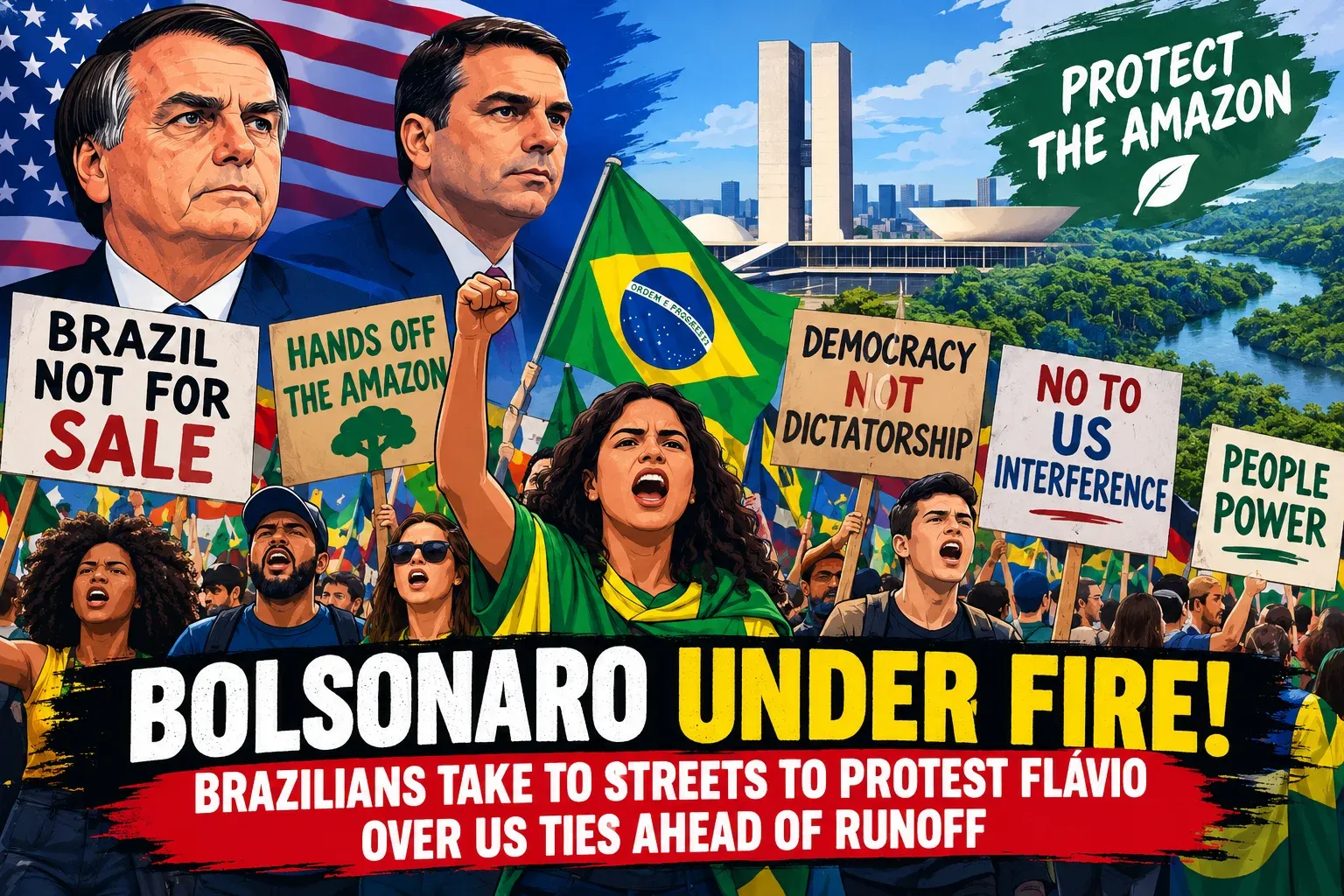
The demonstrations reflect several interconnected issues shaping Brazil’s political debate: concerns about foreign influence, disagreements over economic policy, allegations of social media bias, and the protection of the Amazon rainforest.
The possibility of closer political alignment with the United States has become a subject of criticism among activists who fear that Brazil’s strategic interests could be compromised. At the same time, disputes over online censorship and campaign visibility illustrate how digital platforms have become an increasingly important part of modern elections.
The outcome of Brazil’s political contest could influence the country's domestic priorities and its relationships with other Latin American nations and international partners.
However, the claims made by protesters should be distinguished from verified developments, particularly where they involve allegations of political interference, censorship, or plans for foreign control of natural resources.
As the election process continues, Brazil’s political future will depend not only on the candidates and their supporters but also on voters’ priorities, the strength of democratic institutions, and the country's ability to address economic and environmental challenges.

تبصرے
مفت اکاؤنٹ بنا کر بحث میں شامل ہوں۔
تبصرے لوڈ ہو رہے ہیں…