


MI5 Chief Warns of Growing Threats to UK From Russia, Iran and Artificial Intelligence
The head of Britain's domestic intelligence service, MI5, has warned that the United Kingdom has entered a new era of national security, with growing threats from Russia, Iran and the misuse of artificial intelligence (AI). Sir Ken McCallum said foreign state threats and terrorism now demand a broader response involving government agencies, businesses, universities and the public.
MI5 Warns UK Faces a New Era of National Security
In his annual threat assessment delivered in London on October 13, 2026, MI5 Director General Sir Ken McCallum said the country was facing a changing security environment that requires new approaches to protecting the public.
McCallum urged people to understand that national security is not limited to international conflicts or intelligence operations. It can also affect everyday life, including essential infrastructure, places of worship and online spaces.
He highlighted the potential consequences of disruptions to electricity supplies, increased security requirements at religious sites and the spread of harmful content on social media.
According to McCallum, protecting the country requires cooperation across society rather than relying exclusively on intelligence and law enforcement agencies.
Russia Remains the UK's Primary State Security Concern
McCallum described Russia as the leading state aggressor facing the United Kingdom, warning that Moscow continues to use covert activities and other forms of pressure against Britain and its allies.
He said Russia increasingly relies on criminal networks and individuals recruited through encrypted messaging platforms to carry out operations.
Cryptocurrency can also be used to facilitate payments to people recruited for these activities, according to the intelligence chief.
The approach has become more significant following the expulsion of large numbers of Russian intelligence officers from Western countries after Russia's full-scale invasion of Ukraine in 2022.
Rather than relying solely on traditional intelligence networks, hostile states may turn to intermediaries and criminal groups to conduct activities while obscuring their involvement.
The warning highlights concerns about sabotage, covert operations and other forms of so-called hybrid warfare, which can target countries without triggering conventional military conflict.
Iran-Linked Threats and Arrests Raise Security Concerns
The MI5 chief also warned about threats linked to Iran, including alleged attempts to target Iranian dissidents and Jewish communities in the United Kingdom.
McCallum said more than 50 arrests over the previous 12 months had been linked to Iran-related activities. The figure reflects arrests, not convictions, and does not mean every person arrested was found guilty of an offence.
He also warned that Iranian-linked activity was increasingly raising concerns about more sensitive targets, including military sites.
British security agencies continue to assess potential threats involving foreign governments, individuals acting on their behalf and criminal intermediaries.
The allegations underline the challenges facing authorities as they seek to protect communities, prevent attacks and investigate suspected foreign interference.
MI5 Warns Artificial Intelligence Could Increase Terrorist Capabilities
Artificial intelligence was another major focus of McCallum's annual address.
The intelligence chief said authorities had identified cases in which terrorists attempted to exploit AI to improve reconnaissance and attack methods, including the use of AI-enabled drones.
He also warned about the potential for rapid AI development to make dangerous capabilities more accessible to individuals or groups with limited technical expertise.
One concern is that malicious actors could misuse AI to assist in developing biological weapons or modifying existing pathogens. McCallum stressed that this remains a potential future risk rather than a confirmed example of terrorists successfully creating a new biological weapon using AI.
AI can also be used to generate propaganda, produce targeted extremist material and accelerate cyber operations, creating additional challenges for security services.
To help address emerging risks, MI5 has announced a dedicated AI Threat Assessment Centre to evaluate how developing technologies could be exploited by hostile states and terrorist groups.
Online Radicalisation and Extremist Threats Remain a Concern
Despite the growing focus on state-sponsored threats, McCallum stressed that terrorism remains a serious security challenge.
He highlighted the role of the internet and social media in spreading extremist ideologies and influencing vulnerable individuals, including young people.
The annual assessment included an example of a 13-year-old who had been radicalised by an extreme right-wing group. According to the account, the investigation helped an international partner prevent a potentially lethal attack overseas.
The case illustrates the difficulties authorities face when assessing threats involving minors and responding to radicalisation at an early stage.
Security agencies must address threats from different ideological backgrounds while working to prevent violence and protect vulnerable people from extremist recruitment.
MI5 Calls for a Whole-of-Society Security Response
McCallum said the changing threat landscape means national security cannot be treated as the responsibility of intelligence agencies alone.
He called for stronger cooperation between government, industry, academia and the public to help identify and reduce emerging risks.
Businesses can play a role in protecting critical infrastructure and digital systems, while universities and technology companies can help assess the security implications of advances in AI.
Members of the public also have a role in recognising suspicious activity and understanding the risks associated with online manipulation and extremist content.
The warning reflects a broader shift in national security planning, where cyber threats, foreign interference, criminal networks and emerging technologies increasingly overlap.
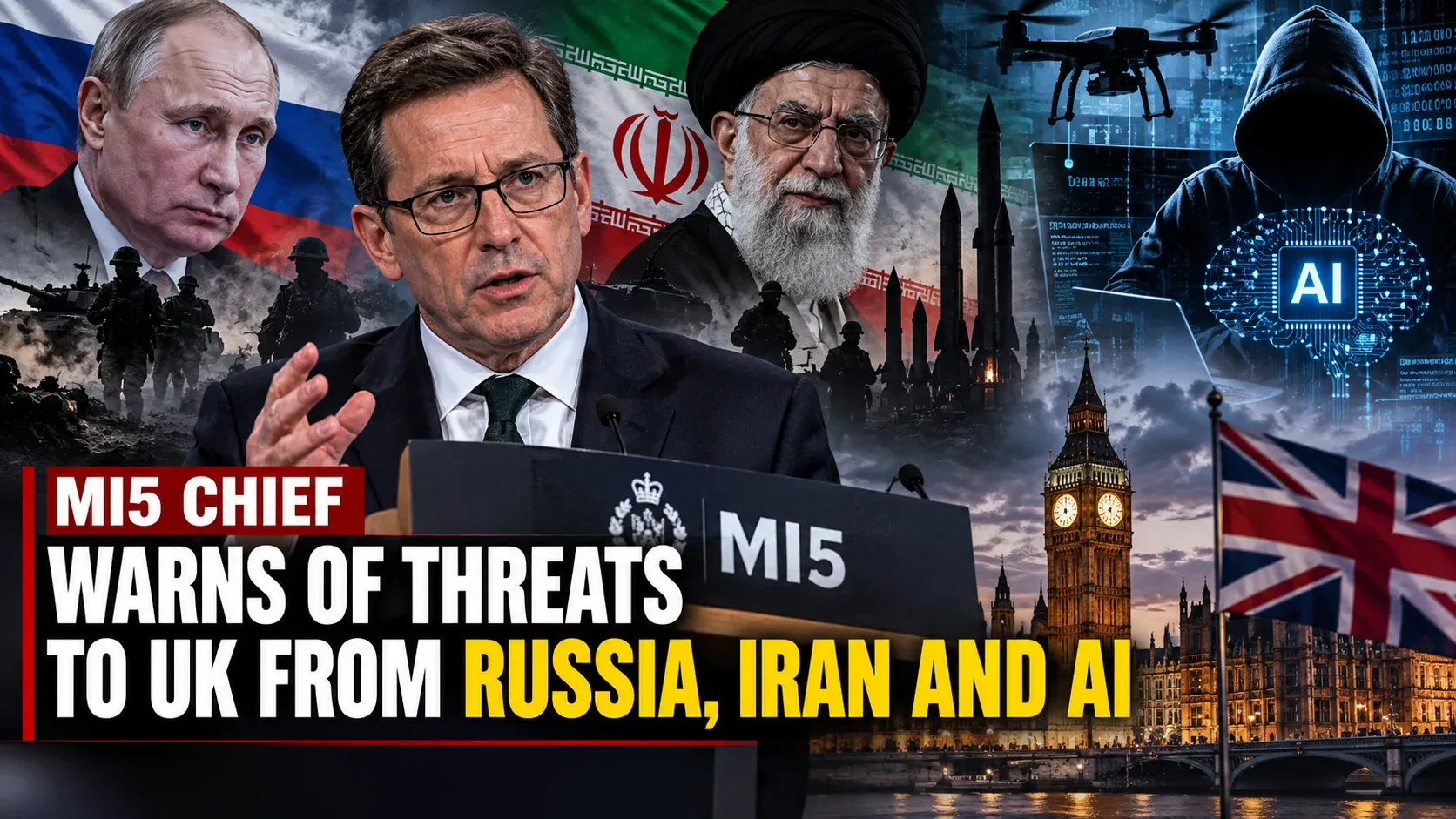
The latest assessment highlights the range of challenges facing British security services, from covert operations linked to foreign states to terrorism and the potential misuse of artificial intelligence.
Russia, Iran and China remain important elements of the UK's wider state-threat assessment, while terrorism continues to require substantial intelligence and law enforcement resources.
The growing availability of advanced technology could further complicate efforts to detect and prevent attacks.
McCallum's central message was that the UK must adapt to a changing security environment and strengthen cooperation across society to respond effectively.
As AI capabilities develop and geopolitical tensions continue, British authorities are likely to place greater emphasis on identifying emerging risks, protecting critical infrastructure and preventing hostile actors from exploiting technological advances.




Comments
A free account lets you join the discussion.
Loading comments…