

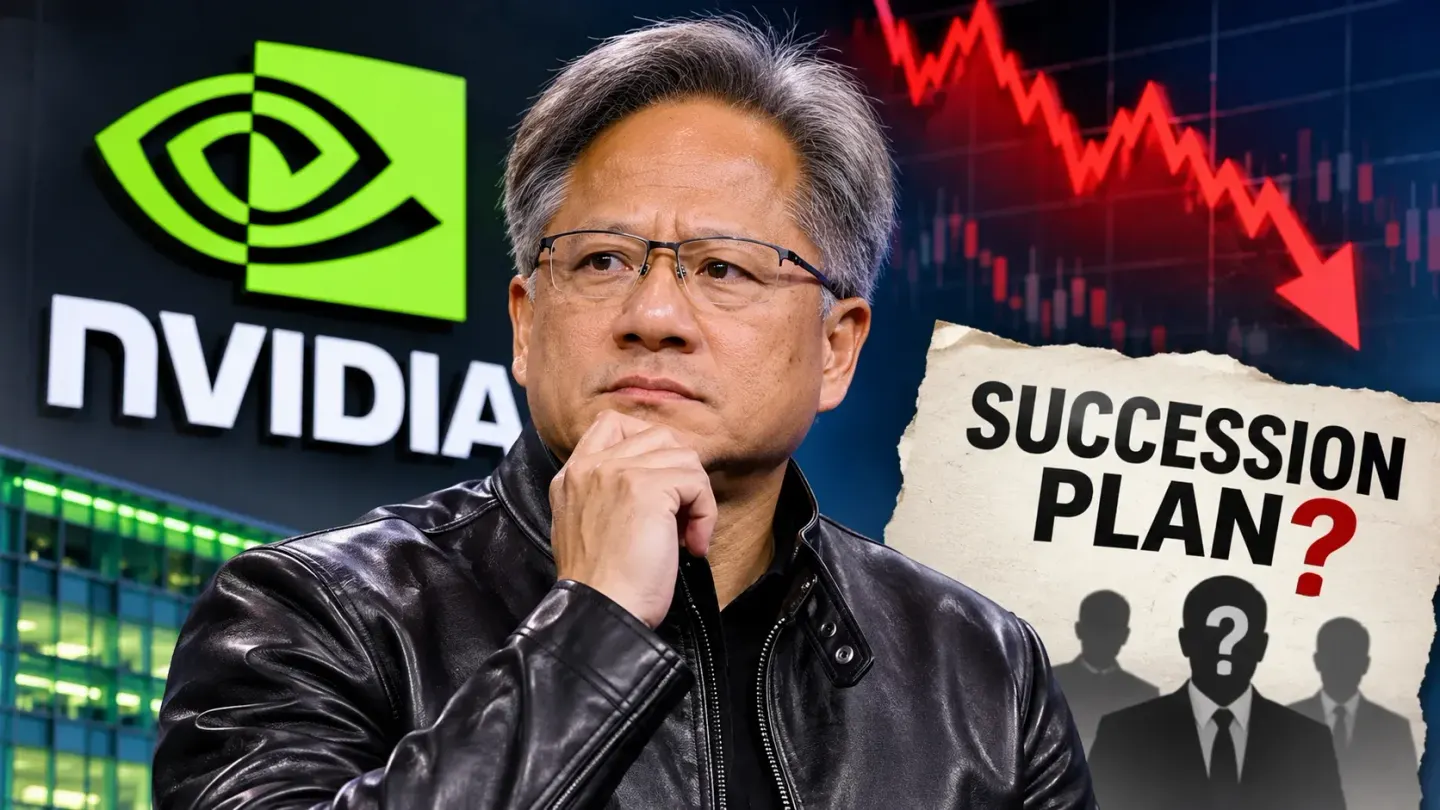
Nvidia is facing growing scrutiny over its leadership stability, corporate governance and relationship with US policymakers as investors await the company's upcoming earnings report. Market analysts say the controversy surrounding CEO Jensen Huang could put additional pressure on the world's leading artificial intelligence chipmaker to clarify its succession plans and address investor concerns.
The discussion comes after reports of an investigation involving Nvidia CEO Jensen Huang and allegations concerning his personal relationship with a woman accused of having links to Chinese intelligence. The allegations have raised questions about potential national security implications, particularly given Huang's influence in Washington and his support for expanding Nvidia's presence in the Chinese market. The claims have not been independently established.
Nvidia shares reportedly declined approximately 5% during the trading session as investors reacted to the developing situation. However, market analyst Anna Rothbun of Grenadilla Advisory described the selloff as relatively moderate compared with what she had initially expected.
Speaking during a market discussion, Rothbun said Huang has become the public face of Nvidia and has led the company for decades. She suggested that uncertainty surrounding his position could represent a significant development for investors, particularly because the company has not publicly established a clear succession plan.
With Nvidia's earnings announcement scheduled for the following week, investors are expected to pay close attention to management's response. Rothbun argued that the company would need to address questions about leadership continuity and explain what arrangements would be in place if Huang were unable to continue serving as CEO.
She noted that investors have not identified an obvious successor within Nvidia who could immediately take over the company's leadership. Unless the board identifies a suitable candidate from within its executive team, uncertainty could remain surrounding the company's long-term management structure. Nevertheless, Rothbun suggested that Huang could remain in his position, although the situation would require further clarification.
The controversy could also complicate Nvidia's relationship with US policymakers, particularly regarding semiconductor exports to China. Huang has previously supported maintaining Nvidia's business presence in the Chinese market, while US officials have increasingly emphasized national security concerns when considering advanced AI chip exports.
According to Rothbun, the latest developments could create a perception problem for Nvidia because Huang has maintained relationships with lawmakers and policymakers in Washington. His previous comments supporting semiconductor exports to China could now face renewed scrutiny.
She suggested that lawmakers may seek further discussions with Huang about Nvidia's China strategy and the potential national security implications of its international business operations. The situation could also bring earlier policy decisions and discussions involving the company under closer examination.
Meanwhile, the controversy surrounding Nvidia comes as artificial intelligence company Anthropic prepares for a potential initial public offering (IPO). Reuters previously reported that the company's IPO roadshow was expected to begin during the week.
Rothbun said the Nvidia situation would not necessarily have a direct impact on Anthropic's ability to raise capital. However, broader changes in investor sentiment toward artificial intelligence companies could make the fundraising process more challenging.
She explained that enthusiasm for AI investments had been significantly stronger when Anthropic first began discussing its IPO plans. However, recent market volatility and changing expectations about returns from artificial intelligence infrastructure investments have made investors more cautious.
Anthropic has also faced questions about its proposed valuation, with investors reportedly pushing back against figures approaching $2 trillion. Rothbun suggested that the company might need to accept a lower valuation to attract investors, although its position as a potential first major frontier AI laboratory to enter the public markets could generate significant interest among long-term investors.
The discussion also examined the recent correction in technology and AI-related stocks. Although the Nasdaq Composite was recovering during the trading session, Rothbun described last week's market decline as a genuine correction rather than simply a temporary reaction.
She attributed the selloff partly to concerns that data center operators could face longer timelines before generating returns on their substantial artificial intelligence investments.
When expected future cash flows are pushed further into the future, their present value decreases, potentially putting downward pressure on company valuations. This shift in expectations contributed to the reassessment of AI-related stocks, according to Rothbun.
However, she also emphasized that the speed of the market decline reflected growing investor anxiety. While some repricing was justified by changing expectations about investment returns, she believed the scale of the selloff had become excessive.
Rothbun argued that the underlying artificial intelligence technology, infrastructure expansion and fundamental business outlook had not fundamentally changed during the period of market volatility. Instead, investor sentiment, fear and expectations surrounding the timing of future returns played a significant role in the market's movements.
As Nvidia approaches its next earnings announcement, investors will be watching closely for updates on corporate leadership, succession planning, China-related semiconductor policy and the company's broader artificial intelligence outlook. The company's response could become an important factor in determining market confidence in Nvidia and the wider AI investment sector.



टिप्पणियाँ
मुफ़्त खाता बनाकर चर्चा में शामिल हों।
टिप्पणियाँ लोड हो रही हैं…