


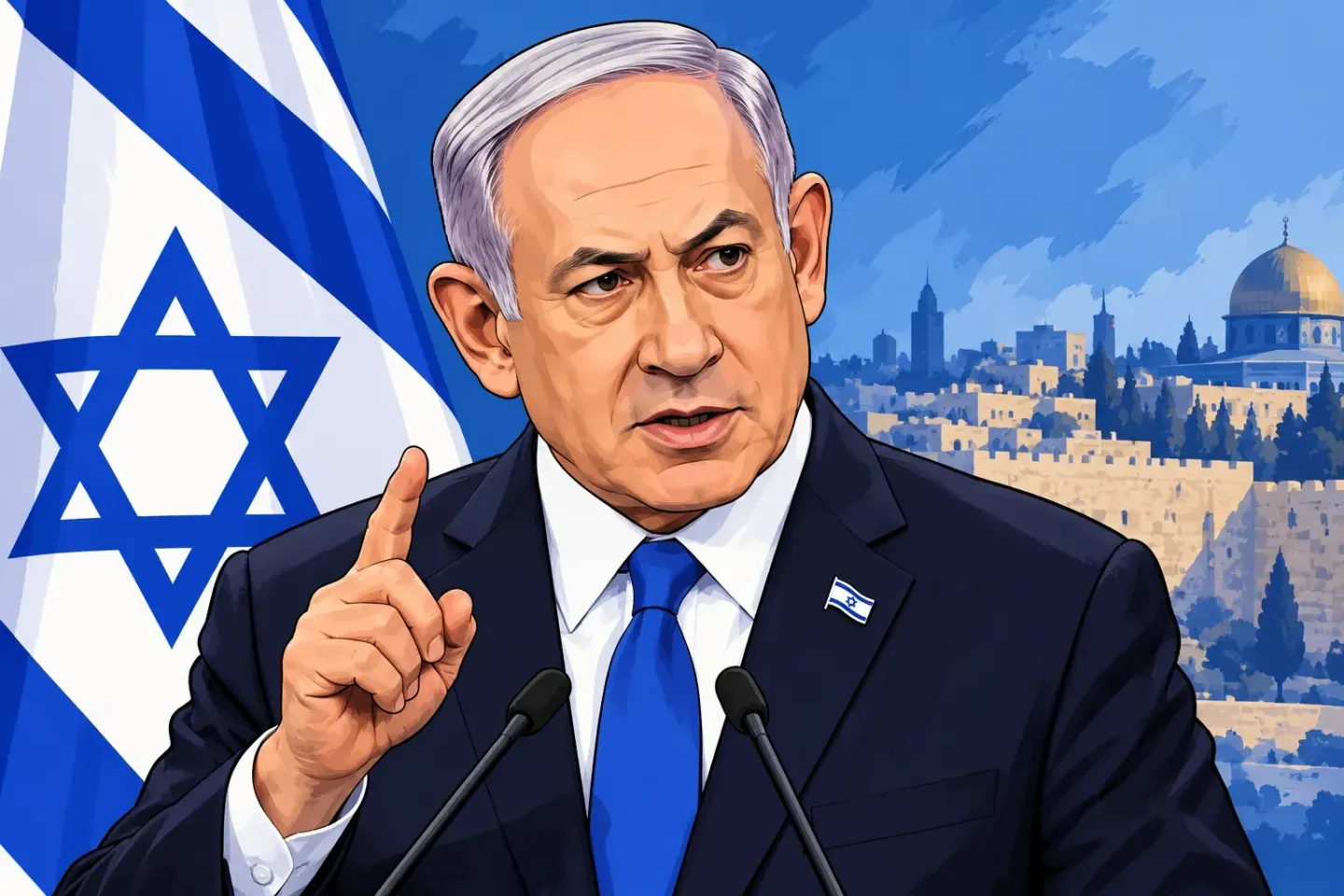
Israel's election has ended without a clear winner, leaving Prime Minister Benjamin Netanyahu facing an uncertain path to securing a parliamentary majority. Exit polls suggest a close contest between Netanyahu's Likud Party and its right-wing allies and a rival political bloc led by former military chief Gadi Eisenkot. The results could shape Israel's political future, its approach to the war in Gaza, and its relations with the United States.
According to the exit polls discussed in the provided election analysis, Netanyahu's Likud Party was projected to win approximately 26 to 27 seats, compared with around 21 seats for Eisenkot's party. However, winning the largest number of seats does not automatically guarantee the ability to form a government in Israel's parliamentary system. The overall strength of each political bloc and its ability to secure support from other parties will be critical.
The initial figures were still preliminary, with only a small portion of the votes counted at the time of the discussion. The analysis also highlighted the importance of military votes, which were not fully represented in the exit polls. With a significant number of Israeli soldiers voting from military bases, the final results could differ from the early projections.
The main challenge for Netanyahu is that his political opponents could collectively have enough seats to block him from forming a government. However, the rival bloc also faces difficulties because its members have different political positions and may struggle to agree on a common coalition. The group includes parties from across the political spectrum, including right-wing, centrist, left-wing and Arab-Israeli political factions.
These differences could make coalition negotiations complicated, even if the opposition bloc secures more seats collectively. Israel has experienced similar political deadlocks in the past, including a period between 2019 and 2020 when the country held multiple elections without quickly resolving its political impasse. Another election could become a possibility if no political leader can secure enough parliamentary support.
Despite the uncertainty, Netanyahu would not automatically leave office if his party failed to form a new government immediately. Under Israel's parliamentary system, the incumbent government generally remains in place while the process of forming a new coalition continues.
Once the official election results are submitted, Israel's president is expected to consult political representatives and designate a candidate to attempt to form a government. The selected candidate is given a limited period to negotiate with other parties and secure sufficient support. If the first candidate fails, another leader may receive an opportunity. If the political process ultimately fails, another election could follow.
This process means Netanyahu could remain prime minister for months even if the election results do not provide him with a clear route to a new governing majority. A prolonged period of political uncertainty could also affect government decision-making and Israel's domestic and foreign policy priorities.
The election is particularly significant because it comes amid continuing tensions surrounding the Israeli-Palestinian conflict and the war in Gaza. Netanyahu's political future is closely connected to disagreements over national security, the cost of living, the direction of the government and the country's long-term approach to the Palestinians.
One major difference between Netanyahu's political allies and Eisenkot's potential coalition partners concerns the future of Gaza and the possibility of a two-state solution. Netanyahu's right-wing allies include hardline politicians who oppose Palestinian statehood and have advocated expanding Israeli settlements. Some figures within this camp have also discussed the possibility of restoring Jewish settlements in Gaza.
Eisenkot and some of his political partners have expressed support for a different long-term approach to the Palestinian issue. The election analysis highlighted Eisenkot's earlier proposal for Gaza's postwar administration, which called for a transitional arrangement involving the Palestinian Authority and Egypt, with the longer-term aim of avoiding indefinite Israeli control of the territory.
Although such proposals do not guarantee agreement within a future government, they illustrate the policy differences that could influence coalition negotiations. Any new Israeli administration would face difficult questions about Gaza's governance, regional security and the future of relations with the Palestinians.
Another important issue is Israel's relationship with US President Donald Trump. Netanyahu has traditionally emphasized his international relationships, particularly his ties with American leaders. Eisenkot, by contrast, has focused more heavily on domestic concerns, including the cost of living, national unity and the everyday challenges facing Israeli citizens.
Eisenkot's background as a senior military figure could strengthen his security credentials, but his experience in international diplomacy and his potential approach to relations with the Trump administration remain uncertain. His ability to build a coalition would therefore be only one of several factors determining Israel's future political direction.
Regional security developments could further complicate the situation. The discussion raised concerns that renewed tensions involving Iran could coincide with Israel's coalition negotiations. It also referred to a report that the Trump administration had informed Gulf allies to prepare for a possible escalation after the US midterm elections. These developments were presented as a potential scenario rather than a confirmed decision to resume military action.
If a major security crisis emerged while Netanyahu remained in a transitional government, it could change the political calculations of rival parties. Netanyahu might seek support for an emergency unity government by arguing that national security requires cooperation across party lines. However, whether opposition parties would agree to such an arrangement would depend on the circumstances and the terms offered.
For now, the immediate focus remains on the official election results and the negotiations that follow. The final parliamentary seat distribution will determine which political leaders have a realistic opportunity to form a government and whether competing parties can overcome their differences.
The election could mark a turning point for Netanyahu, but the early projections do not establish that he has lost power or that his opponents will successfully replace him. The outcome will depend on the final count, the distribution of seats among political blocs and the ability of party leaders to negotiate a workable coalition.
As Israel awaits a clearer result, the country faces the possibility of extended political uncertainty at a time of heightened regional tensions. The coming negotiations will be crucial not only for determining who leads Israel but also for shaping its policies on Gaza, relations with Washington and the broader Israeli-Palestinian conflict.



टिप्पणियाँ
मुफ़्त खाता बनाकर चर्चा में शामिल हों।
टिप्पणियाँ लोड हो रही हैं…