

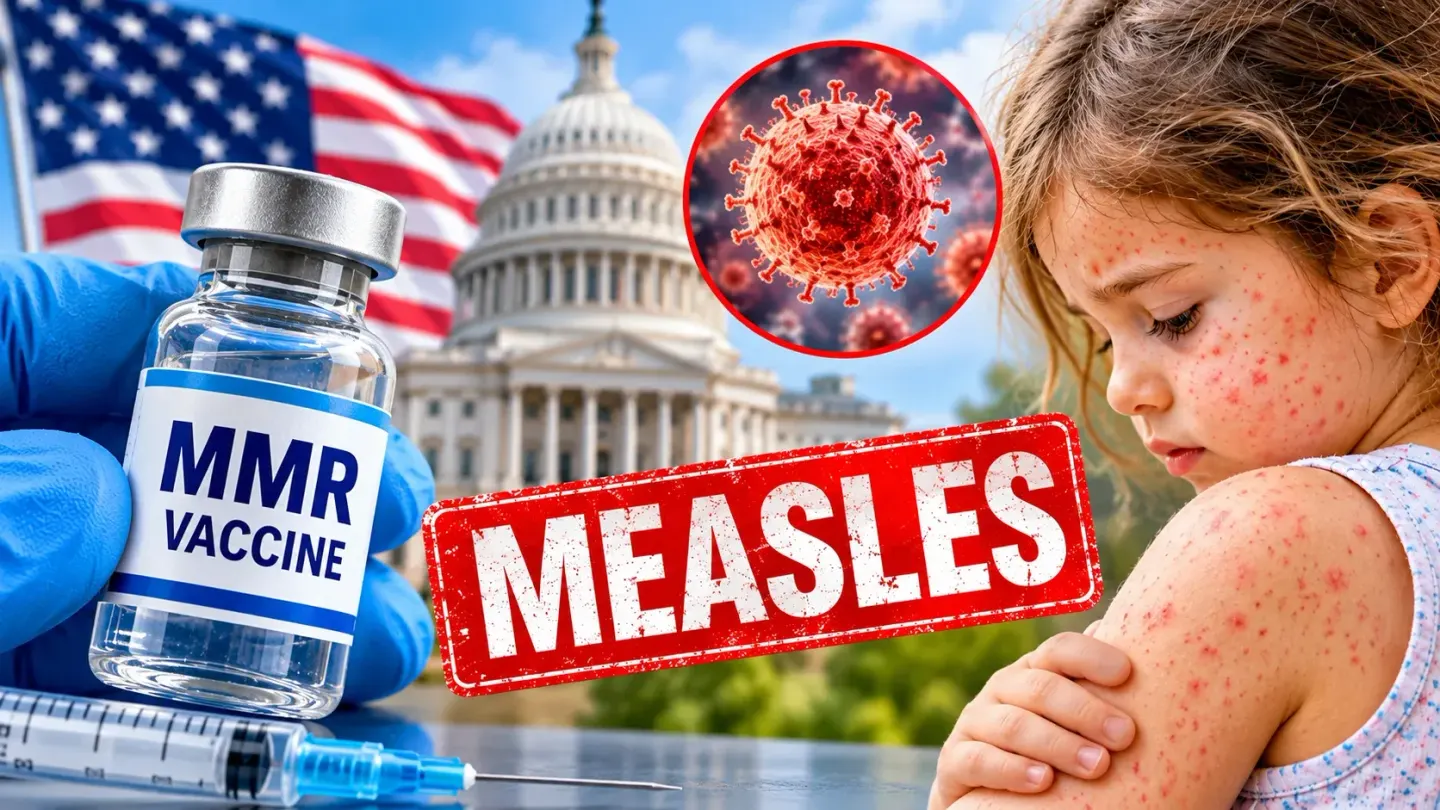
The United States has officially lost its measles elimination status after the Pan American Health Organization (PAHO) determined that the same strain of the virus has continued spreading across the country for more than a year, marking a major setback for public health efforts.
The decision comes amid a growing number of measles infections and declining childhood vaccination rates in the United States. Health experts are warning that restoring the country's measles elimination status will require a coordinated national effort, stronger vaccination campaigns, sustained disease surveillance and rapid responses to outbreaks.
The US originally achieved measles elimination status in 2000 after years of successful vaccination efforts. However, public health officials have increasingly raised concerns about falling childhood immunization rates, particularly since the COVID-19 pandemic. The decline has contributed to renewed measles transmission and outbreaks in multiple states.
According to medical experts, regaining elimination status will require the country to interrupt continuous measles transmission for at least 12 months. This will involve more than responding to individual outbreaks. A nationwide vaccination campaign and consistent financial support for state and local health departments will also be essential.
Although the Trump administration has provided emergency funding to address measles outbreaks, its response has faced criticism over the absence of a larger national vaccination campaign.
Meanwhile, a new study has highlighted another concerning development: an increase in measles infections among pregnant women.
Medical experts say this is a significant public health concern because previous generations were less likely to experience measles during adulthood. Before widespread vaccination, most people contracted the infection during childhood and developed long-lasting immunity. Today, however, some younger women have neither been vaccinated nor developed natural immunity, leaving them vulnerable to infection during pregnancy.
The study identified at least 112 women who were diagnosed with measles while pregnant. Approximately one in four required hospitalization, highlighting the potential severity of the infection during pregnancy.
Researchers have also reported at least 13 cases of congenital measles, in which babies were born with the infection after the virus crossed the placenta during pregnancy.
Congenital measles can expose newborns to serious complications. One particularly concerning condition is subacute sclerosing panencephalitis (SSPE), a rare, progressive and often fatal neurological disorder that can develop years after an initial measles infection.
Medical experts emphasize that the measles, mumps and rubella (MMR) vaccine is a live, weakened vaccine and is therefore not recommended during pregnancy. Women who are pregnant and uncertain about their immunity should consult their obstetrician or healthcare provider.
Doctors can recommend a blood test to check measles IgG antibodies, which can help determine whether a person has immunity from previous vaccination or infection.
Women who are planning to become pregnant are advised to review their vaccination records and receive the MMR vaccine before pregnancy if they are not immune. Those who are already pregnant and may have been exposed to measles should seek medical advice promptly, as preventive treatment may be available to reduce the risk of complications.
Health experts also stress that adults who are unsure about their childhood vaccination history should contact their primary care physician to discuss antibody testing and vaccination options.
With approximately 40% of pregnancies in the United States reported as unplanned, doctors warn that many women may enter pregnancy without knowing whether they are protected against measles.
The loss of measles elimination status underscores the importance of maintaining high vaccination coverage, strengthening public health surveillance and improving awareness about the risks of measles. Experts say restoring the country's previous status will depend on sustained national action to prevent further transmission and protect vulnerable populations, particularly pregnant women and newborns.




التعليقات
حساب مجاني يتيح لك المشاركة في النقاش.
جارٍ تحميل التعليقات…