

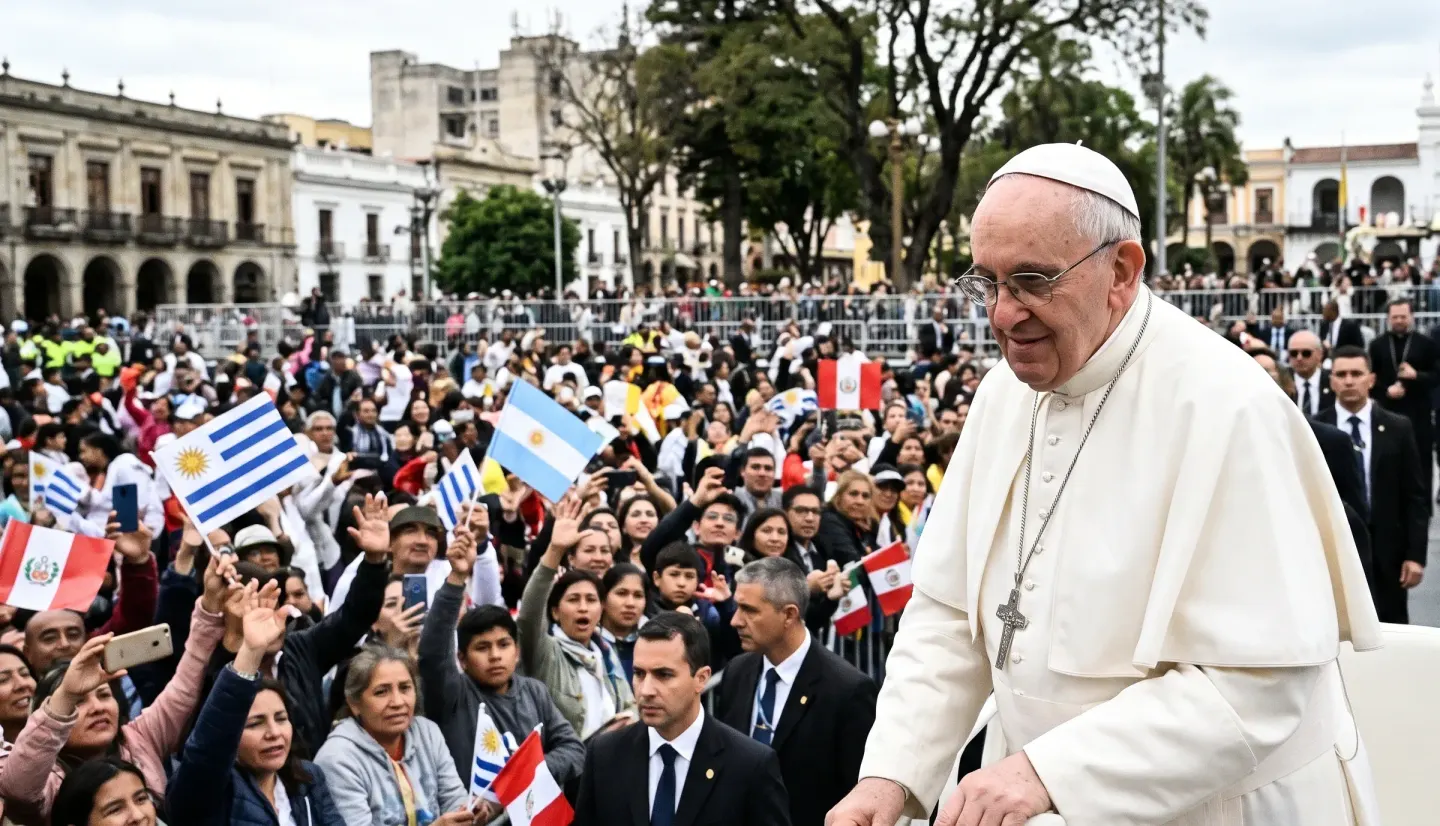
Pope Leo XIV is preparing for a landmark 12-day tour of South America, visiting Uruguay, Argentina and Peru in what promises to be one of the most demanding international trips of his papacy. The visit carries particular personal significance for the Chicago-born pontiff, who spent decades serving as a missionary, priest and bishop in Peru before rising to the highest position in the Catholic Church.
The tour comes at a critical moment for Catholicism in Latin America, a region that remains home to more than 40% of the world's Catholic population but has experienced a gradual decline in religious affiliation. It will also provide an opportunity for Pope Leo to reconnect with communities that shaped his religious journey while addressing challenges facing the Church, including declining membership, a shortage of priests and longstanding sexual abuse scandals.
According to Reuters journalists covering the papal visit, Leo's journey is expected to include more than 50 events, 36 speeches and approximately 31,000 kilometers of travel. The demanding schedule will involve around 12 flights, including helicopter journeys, as the pontiff visits multiple cities across the three countries.
For Pope Leo, Peru represents much more than another diplomatic destination. He first arrived in the country in 1985 as a young Augustinian missionary and spent approximately two decades working there over several decades. He later became a bishop and acquired Peruvian citizenship, establishing deep personal and religious connections with the country.
One of the most significant moments of the visit will be his return to Chiclayo, where he previously served as bishop before being appointed to a Vatican position in 2023. His itinerary includes a dinner with priests from the diocese he once led, offering an opportunity to reconnect with former colleagues and revisit the community that played an important role in his life.
Vatican correspondent Joshua McElwee, who has covered papal journeys since 2013 and travelled on more than 30 papal trips, described the Peru visit as a meaningful homecoming. He noted that the pope will have an opportunity to revisit familiar places, reconnect with old friends and perhaps even see some of his former belongings.
The visit to Argentina carries a different historical significance. Argentina was the birthplace of Pope Francis, who led the Catholic Church for 12 years before his death in April 2025. Francis became the first Latin American pope and the first pontiff from the Americas, but never had the opportunity to return to his homeland during his papacy.
Leo's visit will therefore mark an important moment for Argentine Catholics, who will welcome the successor of a pope whose leadership transformed the global Church. His expected speech in Buenos Aires will attract particular attention because of Argentina's political environment and the close relationship between President Javier Milei and US President Donald Trump.
Observers will be watching closely to see whether Pope Leo addresses political, economic and international issues during the visit. In recent months, the pontiff has taken increasingly visible positions on global developments, including artificial intelligence and the war in Iran. His comments in Argentina could therefore carry implications beyond the Catholic community and resonate across the international political landscape.
However, the South American tour comes as the Catholic Church faces significant challenges in a region historically considered one of its strongest foundations.
Reuters correspondent Cassandra Garrison, who has covered Latin America since 2018, highlighted the changing religious landscape across the region. Recent Pew Research findings indicate that Catholic affiliation has declined in several Latin American countries, with approximately one in five adults raised Catholic no longer identifying with the Church.
The shift does not necessarily indicate a widespread rejection of religion. Instead, many people are exploring alternative spiritual movements, independent religious communities and evangelical Christianity. The growing popularity of evangelical churches has become particularly noticeable in several Latin American countries.
The Church is also struggling to attract young men to the priesthood, creating concerns about the availability of religious leaders in local communities. In Mexico, the shortage of priests and the growing influence of social media have contributed to another emerging problem: individuals presenting themselves as Catholic priests without official authorization.
According to Garrison, some self-proclaimed priests have used social media platforms to build large followings and establish religious identities without providing proper credentials. The trend highlights the difficulties facing the Catholic Church as it attempts to maintain institutional authority in an increasingly digital environment.
Another major issue expected to feature during Pope Leo's visit is the Catholic Church's handling of sexual abuse allegations. Latin America has witnessed several high-profile abuse scandals involving religious figures, leaving survivors demanding stronger accountability and meaningful institutional reforms.
Although the Vatican has introduced changes to canon law and established mechanisms to improve safeguarding policies, many survivors believe that progress has been insufficient. They continue to call for greater transparency, accountability from bishops and the removal of clergy members found responsible for abuse.
Pope Leo is expected to meet with abuse survivors during his South American tour, although the Vatican has not disclosed all the details of these meetings. Survivors have welcomed the possibility of direct engagement with the pontiff but insist that meaningful action must follow.
Peru is particularly significant in this context because of Leo's previous involvement in addressing abuse allegations connected to the conservative Catholic organization Sodalitium Christianae Vitae, commonly known as Sodalitium or Sodalicio. The organization faced allegations of sexual, physical and psychological abuse involving its founder and members.
According to McElwee, Leo initially returned to shorter public appearances following surgery but gradually resumed his regular activities, including Wednesday general audiences in St. Peter's Square. His voice has remained strong, and he has appeared energetic during recent engagements.
Nevertheless, the demanding South American schedule will test his physical endurance. The pope is expected to participate in six or seven events daily, many involving public speeches and extensive travel. His medical team has also been managing his recovery carefully, with a previously planned helicopter visit within Italy cancelled because doctors considered him not yet ready for the journey.
The tour will consequently offer an important indication of how well Pope Leo can manage the extensive international travel that has become a defining feature of modern papal leadership.
Beyond South America, the Vatican is already considering the pontiff's future international engagements. His only confirmed international trip for 2027, according to the discussion, is a planned visit to South Korea in August for World Youth Day, a major Catholic gathering expected to attract millions of participants.
There is also speculation about a possible visit to the United States, which would mark Leo's return to his home country as pope. Such a journey could include several American cities and potentially an address at the United Nations in New York. However, the Vatican has not confirmed the visit, and its timing could be influenced by the US political calendar and the 2026 midterm elections.
Mexico and Costa Rica are also potential destinations. Pope Leo has reportedly expressed interest in visiting the Basilica of Our Lady of Guadalupe in Mexico City, one of the most important Catholic pilgrimage sites in the world.
As millions of Catholics prepare to welcome him, the pontiff will face an opportunity to strengthen the Church's relationship with Latin America, address long-standing concerns and establish his own direction for the future of the global Catholic community.

التعليقات
حساب مجاني يتيح لك المشاركة في النقاش.
جارٍ تحميل التعليقات…