

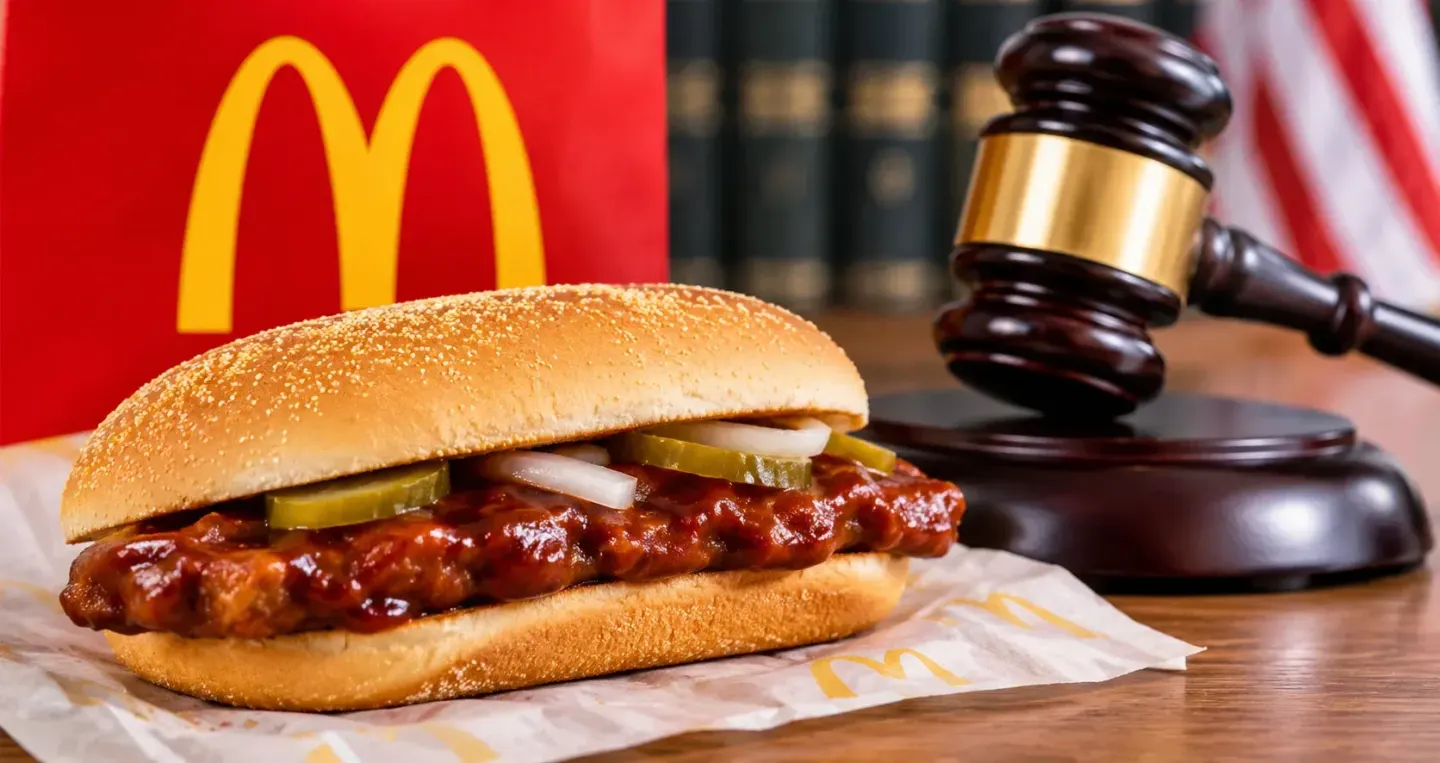
A federal judge has allowed a class-action lawsuit against McDonald’s over its popular McRib sandwich to move forward, rejecting the fast-food giant’s request to dismiss the case. The lawsuit alleges that the company misled customers by marketing the McRib in a way that suggests it contains premium pork rib meat, when the sandwich is made from other pork products.
The legal dispute centers on how McDonald’s presents the McRib to consumers and whether its branding and advertising create a misleading impression about the sandwich’s ingredients. Customers involved in the proposed class action argue that the sandwich is promoted as a premium pork rib product, with a patty deliberately shaped to resemble a rack of ribs.
According to the lawsuit, the McRib does not contain the premium rib meat that some customers believe they are purchasing. Instead, the plaintiffs claim that it is made from lower-grade pork products. They argue that the sandwich’s name, appearance and marketing contribute to consumer confusion, particularly among people willing to pay a higher price for what they perceive to be a premium meat product.
However, McDonald’s disputes the allegations and maintains that its ingredient information is transparent. The company has described the claims as meritless, arguing that the lawsuit misrepresents the facts surrounding the McRib and its composition.
McDonald’s online ingredient information identifies pork as an ingredient without specifically stating that the sandwich contains premium pork rib meat. This distinction is central to the legal dispute, as the plaintiffs contend that the product’s name and presentation could lead reasonable customers to form different expectations about what they are buying.
The judge’s decision to reject McDonald’s request for dismissal means the case can proceed to the next stage of litigation. It does not establish that the company violated consumer protection laws or that the plaintiffs’ allegations are true. Those issues will need to be addressed as the legal proceedings continue.
The lawsuit, filed last year, also seeks damages for customers who claim they were misled by the McRib’s marketing. The proposed class action could have broader implications for how fast-food companies name, promote and describe their products, particularly when product branding may create expectations that differ from ingredient disclosures.
The McRib has developed a loyal following among McDonald’s customers, partly because it typically appears on menus for limited periods rather than remaining available throughout the year. Its periodic returns often generate renewed interest among fans eager to purchase the sandwich before it disappears again.
The sandwich is also considered one of the more expensive items on McDonald’s menu, according to the report, adding another dimension to the dispute over customers’ expectations and the product’s perceived value.
For McDonald’s, the case presents a potential challenge to its marketing practices and could draw further attention to ingredient transparency across the fast-food industry. For consumers, the dispute raises questions about how product names, advertising and ingredient descriptions influence purchasing decisions.
As the McRib lawsuit moves forward, the central question will be whether the company’s marketing gives customers a misleading impression of the sandwich’s contents or whether its ingredient disclosures provide sufficient information for consumers to make informed choices.




التعليقات
حساب مجاني يتيح لك المشاركة في النقاش.
جارٍ تحميل التعليقات…