

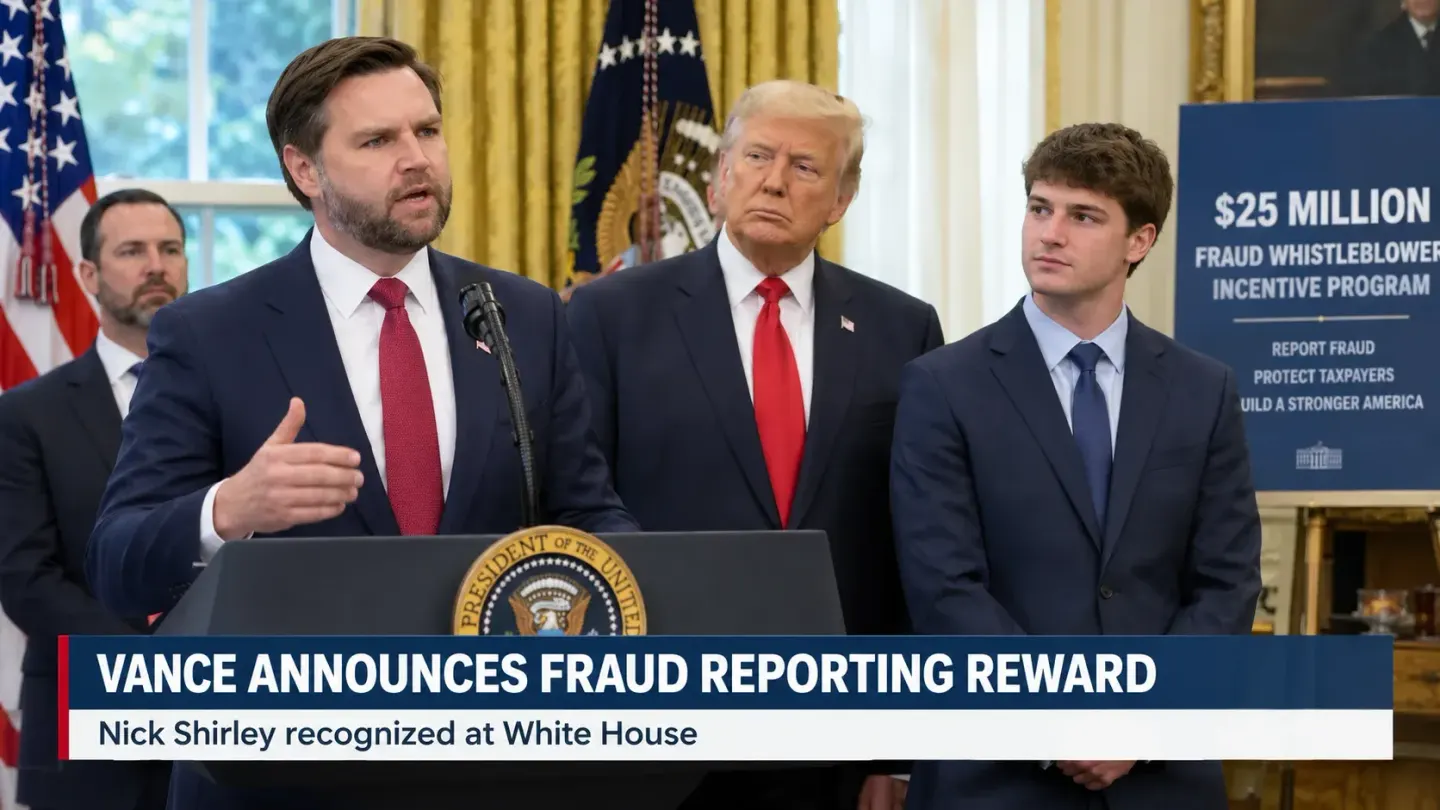
U.S. Vice President JD Vance announced that citizen journalist Nick Shirley would receive a financial reward for his reporting on alleged fraud involving public assistance programs in Minnesota, as the Trump administration unveiled plans to encourage Americans to help identify and expose the misuse of taxpayer money.
Speaking alongside President Donald Trump at the White House, Vance said the proposed whistleblower incentive programme would reward individuals whose
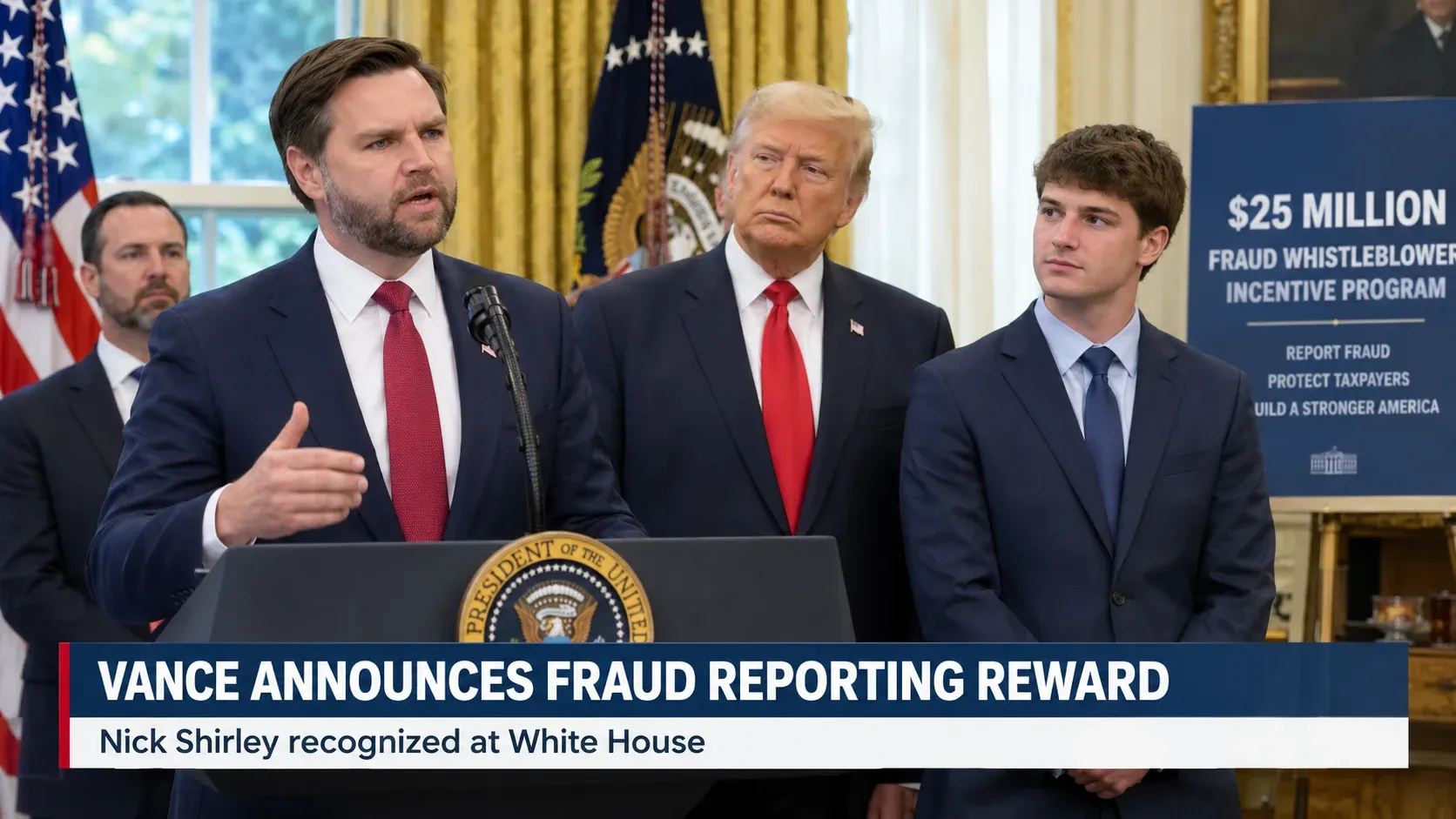
information helps the government uncover fraud and save public funds. He said the initiative emerged from discussions with Trump about ways to involve ordinary citizens in efforts to combat fraud across federal programmes.
Vance praised Shirley, a 24-year-old citizen journalist, for bringing attention to alleged fraud in Minnesota and said his work had helped prompt a broader government response. Shirley said he initially investigated the issue out of concern for taxpayer money and argued that individuals who expose wrongdoing should receive recognition and support rather than face intimidation or scrutiny.
Trump said he would personally arbitrate disputes over who qualifies for rewards when multiple individuals claim credit for exposing fraud. He described the proposed arrangement as a form of binding arbitration intended to resolve disagreements quickly and fairly, without lengthy court proceedings.
The announcement came as administration officials outlined several enforcement measures targeting alleged fraud involving government-funded healthcare and public assistance programmes. Officials said improved coordination among federal departments, including the Department of Justice, the Treasury Department and health agencies, was helping investigators trace suspicious payments, pursue cases and identify assets allegedly obtained through fraudulent activity.
During the briefing, officials cited Minnesota as a major focus of their investigations. They said their review of 14 high-risk programme categories had identified concerns involving service providers and that the administration had deferred approximately $500 million in funding while seeking further justification for the expenses. Officials also announced plans to defer an additional $1.2 billion in Medicaid payments to California related to personal care services, citing concerns about the programme's rapid growth.
The administration also called on Congress to introduce tougher penalties for benefits fraud, including mandatory minimum sentences for individuals convicted of relevant offences. Officials further advocated legislation that would establish civil liability for state officials who knowingly allow fraud to continue without taking appropriate action.
Shirley told the gathering that his reporting had attracted significant attention and that he believed the new incentive programme could encourage more Americans to investigate suspected wrongdoing in their communities. He argued that fraud diverts resources from vulnerable people who depend on government assistance, including families seeking healthcare and individuals requiring essential social services.
Officials acknowledged that the effort would require continued investigations and cooperation across government agencies. They said the administration intended to expand its anti-fraud work nationwide, while the proposed incentive system would provide members of the public with an additional reason to report suspected misuse of taxpayer funds.
The announcement places citizen reporting at the centre of the administration's broader anti-fraud campaign. However, allegations of fraud and questions surrounding individual programmes will require investigation and appropriate legal proceedings to establish responsibility.




التعليقات
حساب مجاني يتيح لك المشاركة في النقاش.
جارٍ تحميل التعليقات…