

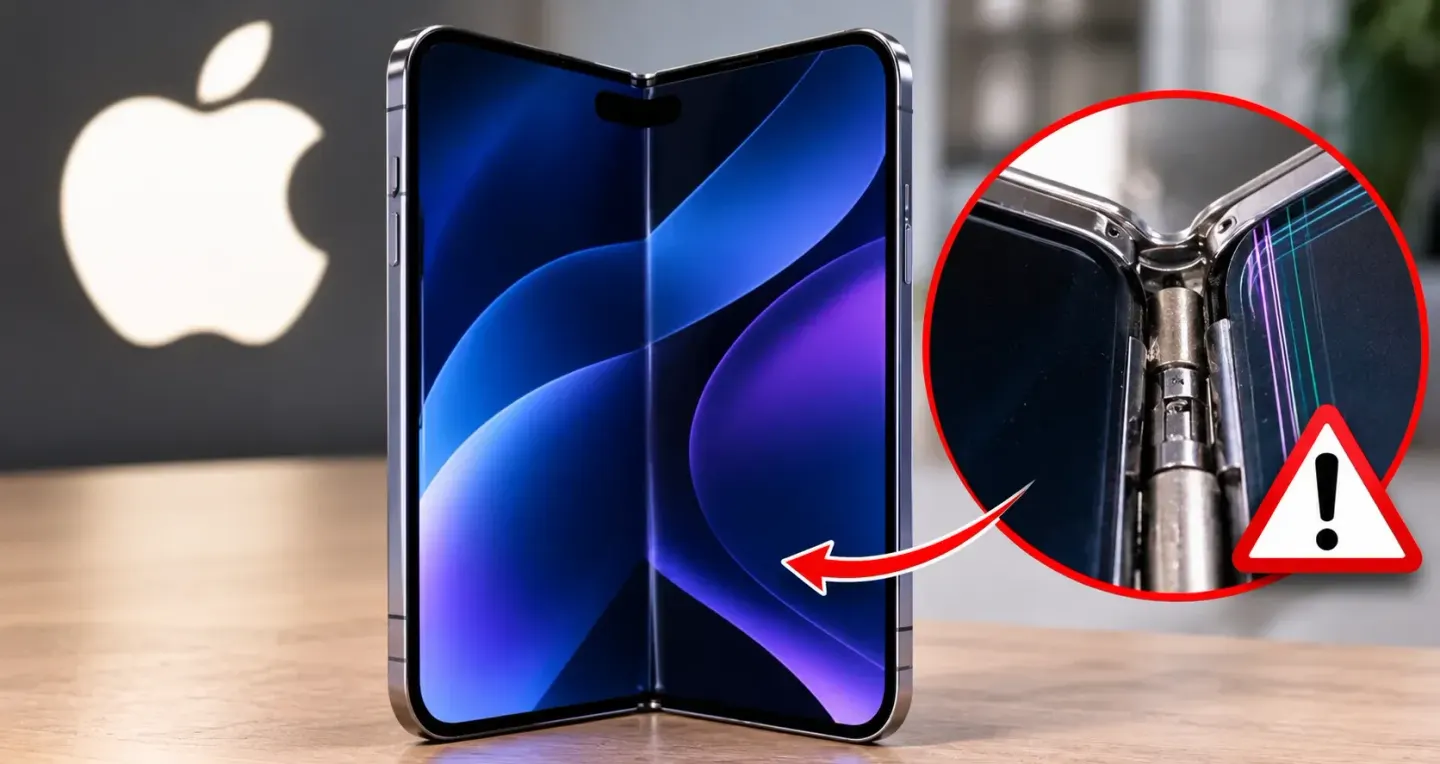
Apple's highly anticipated first foldable smartphone, the iPhone Duo, is facing early durability concerns after reports emerged of cracked inner displays and screen failures near the device's hinge. The reported problems are raising questions about Apple's new foldable design, manufacturing quality and the long-term reliability of its latest flagship hardware.
Although the iPhone Duo is reportedly selling out, with availability extending into 2027, its launch is being overshadowed by complaints from some early customers. Users have reported damage along the inner display's folding area, including dead pixels, bright lines and sections of the screen that appear to have stopped functioning.
Apple has acknowledged an issue affecting a small number of devices and, according to the report, is offering replacements for affected units under AppleCare. However, the exact cause of the failures has become a major concern for consumers and industry analysts.
An investigation involving iFixit, the well-known electronics teardown and repair company, points toward a potentially serious problem with the iPhone Duo's hinge mechanism rather than the display panel itself.
According to iFixit's lead technician, a small component within the hinge assembly may be breaking and sending sharp fragments toward the inner screen. These fragments could penetrate or press against the display from underneath, creating the visible damage reported by users.
The technician identified two possible failure mechanisms. A broken piece from one hinge component could move upward and push into the screen, or another element could become dislodged and directly damage the display as the device folds and unfolds.
This explanation suggests that the screen damage may be a consequence of a mechanical failure beneath the display rather than a defect in the screen technology itself.
The distinction is important because a hinge-related problem could require more extensive repairs than simply replacing a damaged display. Depending on the extent of the damage, repairs might involve replacing the entire housing and hinge assembly or exchanging the affected smartphone.
The reported failures also place Apple's new foldable technology under scrutiny. Although foldable smartphones have been available for several years, the iPhone Duo represents Apple's first generation of its own hinge design.
The launch is also an important early test for Apple's hardware leadership under John Ternus. How the company responds to these initial complaints could influence consumer confidence in its ability to enter the foldable smartphone market successfully.
Apple has faced hardware durability controversies before. The most notable example was the 2014 Bendgate controversy involving the iPhone 6, when customers reported that their devices could bend under pressure. Apple subsequently introduced stronger materials and structural improvements in later generations.
The foldable smartphone market has also experienced similar challenges. Samsung delayed the original Galaxy Fold launch in 2019 after review units experienced screen failures. That incident highlighted the engineering difficulties involved in developing reliable folding displays and hinge mechanisms.
The iPhone Duo's reported problems demonstrate why hinge engineering remains one of the most critical aspects of foldable smartphone development. Every folding and unfolding movement places demands on the mechanical components, and even a small defect can potentially expose the display to physical damage.
Meanwhile, the reports have already had an impact on Apple's supply chain. South Korean component supplier Fine M-Tech, which is associated with the iPhone Duo's hinge system, saw its shares fall nearly 16% on Monday before recovering.
The company denied responsibility for the reported failures and indicated that it was considering legal action. The dispute highlights the financial consequences that hardware-related allegations can have for suppliers connected to major technology launches.
For consumers, the immediate concern is whether the reported failures represent isolated manufacturing defects or a deeper design weakness.
A limited number of damaged devices during the initial launch period would not necessarily indicate a widespread problem. However, if similar failures continue appearing after three, six or twelve months of regular use, the situation could become considerably more serious.
The iFixit technician suggested that a possible weakness in the hinge material or an issue affecting a specific section of the component could be responsible. If the failures ultimately point to the overall engineering design rather than an isolated material defect, Apple could face a much larger challenge.
Although a hardware revision is not considered inevitable, continued reports of failures could increase pressure on the company to investigate the hinge assembly and consider design changes in future production batches.
For now, Apple's response, replacement policy and the performance of the iPhone Duo over the coming months will be closely watched. With foldable smartphones representing a major new hardware category for the company, establishing long-term durability will be essential to maintaining consumer confidence.
The central question is whether the iPhone Duo is experiencing a limited first-batch manufacturing problem or whether a tiny hinge component could expose a much bigger weakness in Apple's first foldable iPhone design.




التعليقات
حساب مجاني يتيح لك المشاركة في النقاش.
جارٍ تحميل التعليقات…