

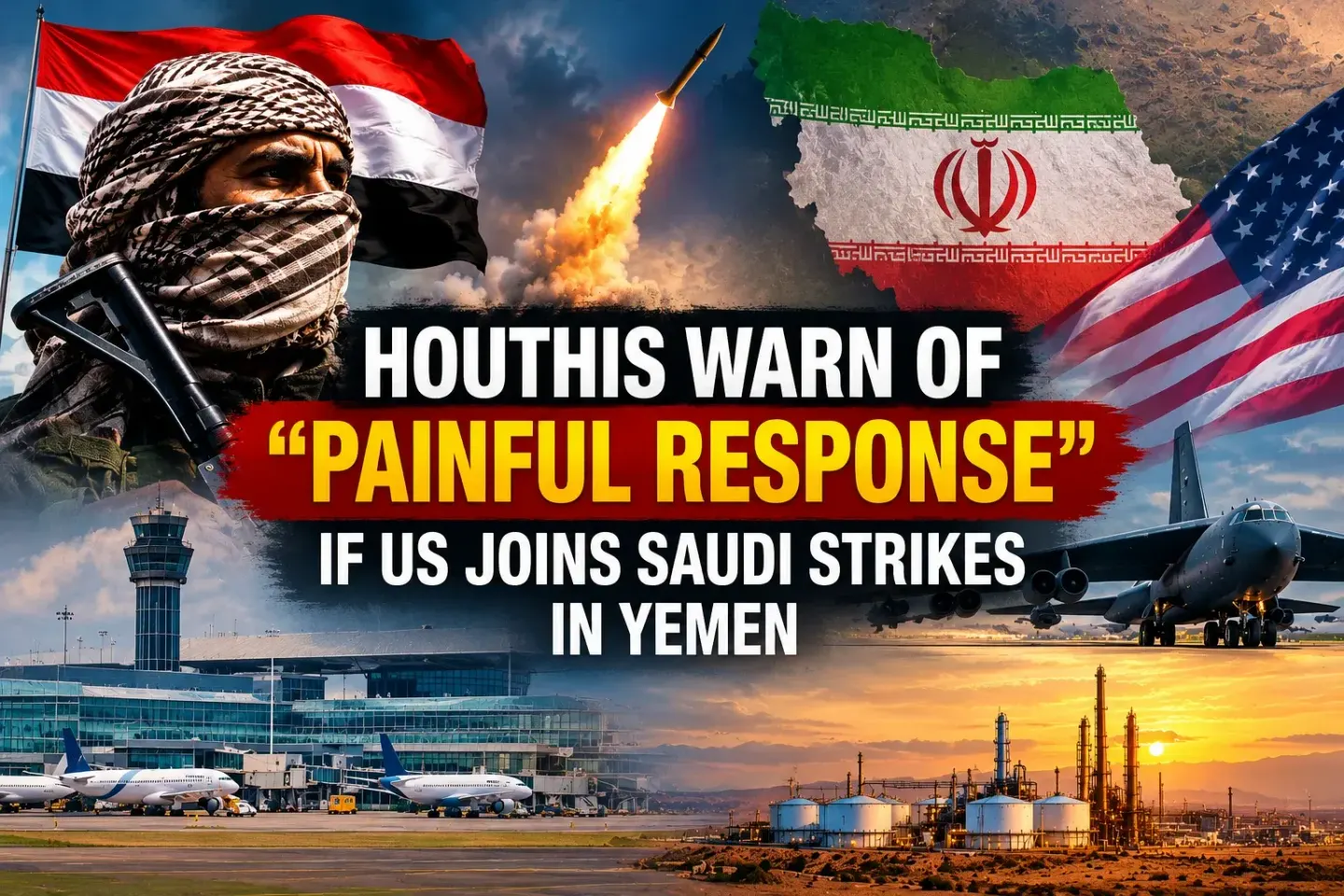
Houthis Warn of “Painful Response” if US Joins Saudi Arabia in Yemen Conflict
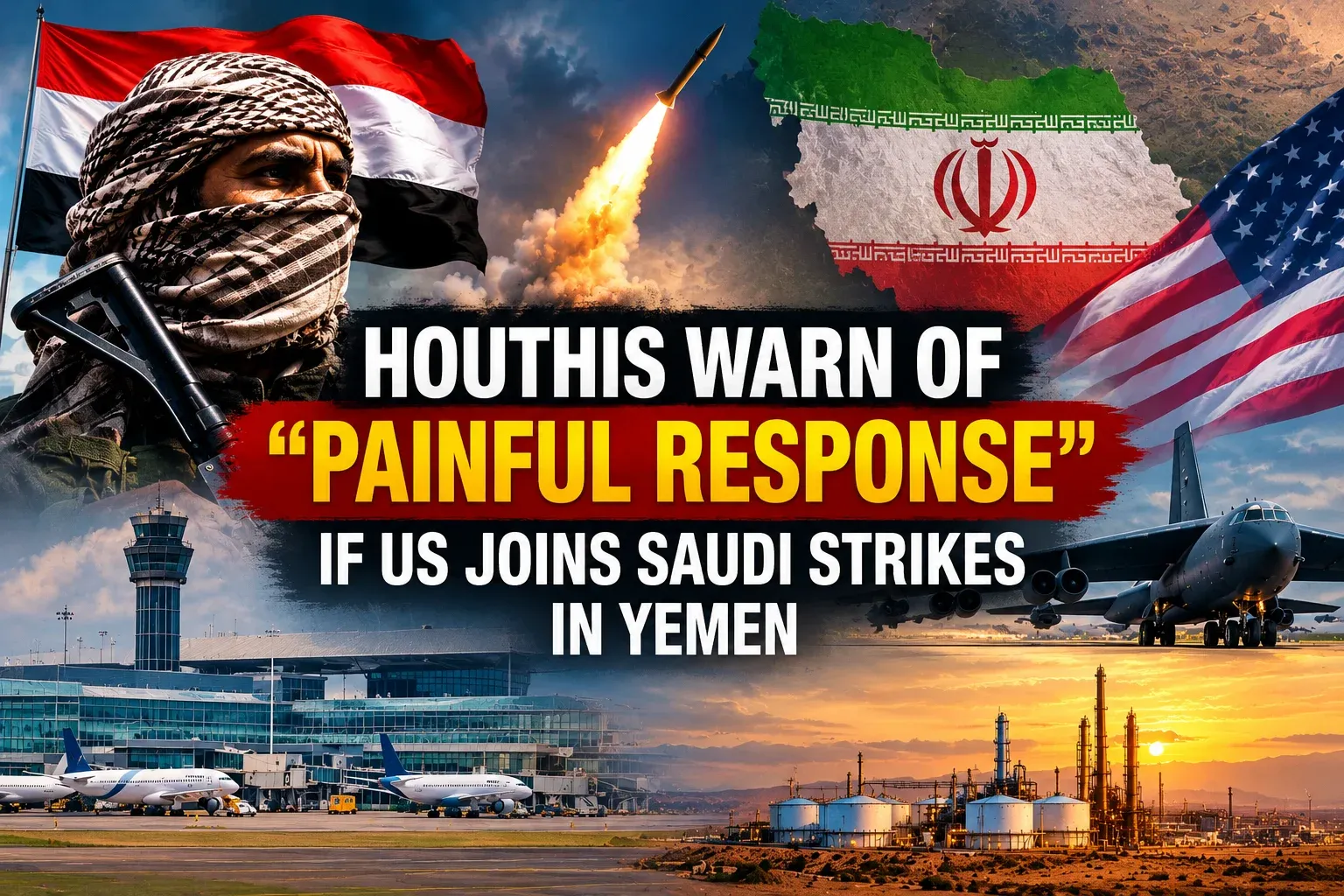
The Houthis have warned of a swift and painful response if the United States joins Saudi Arabia in military operations against the Iran-backed group in Yemen, raising concerns about regional security, aviation safety, and global energy prices.
The Houthi threat comes amid a series of reported attacks on Saudi Arabian airports and growing concerns over the potential expansion of the conflict involving the United States, Iran, Saudi Arabia, and their regional allies.
Houthis Threaten US Amid Rising Tensions in Yemen
The Iran-backed Houthi movement has warned Washington against becoming directly involved in Saudi Arabia’s fight against the group in Yemen. The warning signals the risk of further escalation in a region already facing significant military and security challenges.
The Houthis have demonstrated their ability to target strategic locations, including airports and energy infrastructure, despite Saudi Arabia’s considerably greater conventional military capabilities.
Security concerns have increased following reported attacks on Saudi airports, raising questions about the ability of regional governments to protect critical infrastructure against drone and missile threats.
US Issues Aviation Warning for Saudi Arabia and Surrounding Areas
The US Federal Aviation Administration (FAA) has advised American airlines to exercise caution when operating in and around Saudi Arabia amid heightened regional security risks.
The advisory follows multiple reported attacks on Saudi airports, highlighting potential risks to commercial aviation and international air travel.
The US State Department has also advised American citizens against traveling to the region, reflecting broader concerns about the deteriorating security environment.
These developments could affect airline operations, passenger safety, and commercial travel across parts of the Middle East if tensions continue to escalate.
UK Prime Minister Links RAF Fairford Incident to Iran
Separately, the British prime minister has said that a planned attack last month targeting a US-operated military base in England was almost certainly directed by Iran.
The incident involved RAF Fairford, a strategic British air base used by US military aircraft, including bombers associated with operations involving Iran.
According to the report, more than two dozen countries, including the United States, Canada, and Australia, issued a joint statement blaming Iran for the attempted attack. Tehran has denied involvement.
The suspects were reportedly released from custody, but former CIA counterterrorism official Joe Zaks cautioned against interpreting their release as evidence that Iran was not involved. He said the matter would need to be assessed through the British legal process and subsequent court proceedings.
Iran Retains Asymmetric Warfare Capabilities, Former CIA Official Says
Speaking to CBS News, national security contributor Joe Zaks said Iran continues to possess asymmetric capabilities that could be used against the United States and its allies.
These capabilities include potential threats against US military installations overseas, American citizens abroad, and critical digital infrastructure through cyber operations.
Zaks argued that Iran may increasingly rely on such methods during the current conflict, particularly when confronting adversaries with superior conventional military strength.
Asymmetric warfare allows a state or armed group to create security challenges without matching its opponent's military resources directly. Such tactics can include drones, missiles, cyberattacks, proxy forces, and other unconventional methods.
Houthi Attacks Target Saudi Airports and Energy Infrastructure
Zaks also discussed the Houthi attacks on Saudi Arabia, noting that the kingdom possesses significantly greater conventional military capabilities than the Yemeni armed group.
However, he warned that the Houthis can still cause considerable disruption by targeting strategically important facilities, including airports and energy infrastructure.
Even relatively unsophisticated weapons can create serious security and economic consequences when used against critical targets.
The attacks demonstrate the challenges facing Saudi Arabia and its partners in defending important facilities against relatively low-cost aerial threats.
Saudi Security Concerns Could Affect Energy Prices
One of the major concerns arising from the attacks is their potential impact on global energy markets.
Saudi Arabia is a major oil producer, and threats to its energy infrastructure can increase market uncertainty. Continued attacks or fears of supply disruptions could place upward pressure on international oil prices.
Higher energy costs could affect transportation, manufacturing, and household expenses in countries that depend heavily on imported oil.
However, the actual impact on oil prices would depend on the scale of any disruption, market expectations, and the broader international supply situation.
Regional Insecurity Could Disrupt Saudi Arabia’s International Events
The former CIA official also highlighted the timing of the attacks, noting that Saudi Arabia was preparing to host important international conferences and events.
Security incidents targeting airports and strategic infrastructure can undermine public confidence, complicate travel arrangements, and create logistical challenges for international delegations.
For Saudi Arabia, maintaining a secure environment is important not only for national defense but also for international business, diplomacy, tourism, and investment.
Continued instability
could therefore carry consequences beyond the immediate military confrontation.
US-Iran Tensions Raise Risk of Wider Middle East Conflict
The Houthi warning, aviation advisories, and allegations surrounding the RAF Fairford incident illustrate the interconnected security challenges facing the Middle East and its international partners.
Although the developments involve different locations and allegations, they collectively highlight concerns about attacks on military facilities, regional infrastructure, and civilian aviation.
Iran has denied involvement in the reported British base incident, while the potential extent of coordination between Iran and the Houthis should not be assumed without independently verified evidence.
The situation remains dependent on further developments, including official investigations, military decisions, and whether the United States becomes more directly involved in Saudi Arabia’s confrontation with the Houthis.
For now, the threats underscore the possibility that continued hostilities could create wider security risks and economic uncertainty across the Middle East and beyond.




التعليقات
حساب مجاني يتيح لك المشاركة في النقاش.
جارٍ تحميل التعليقات…