

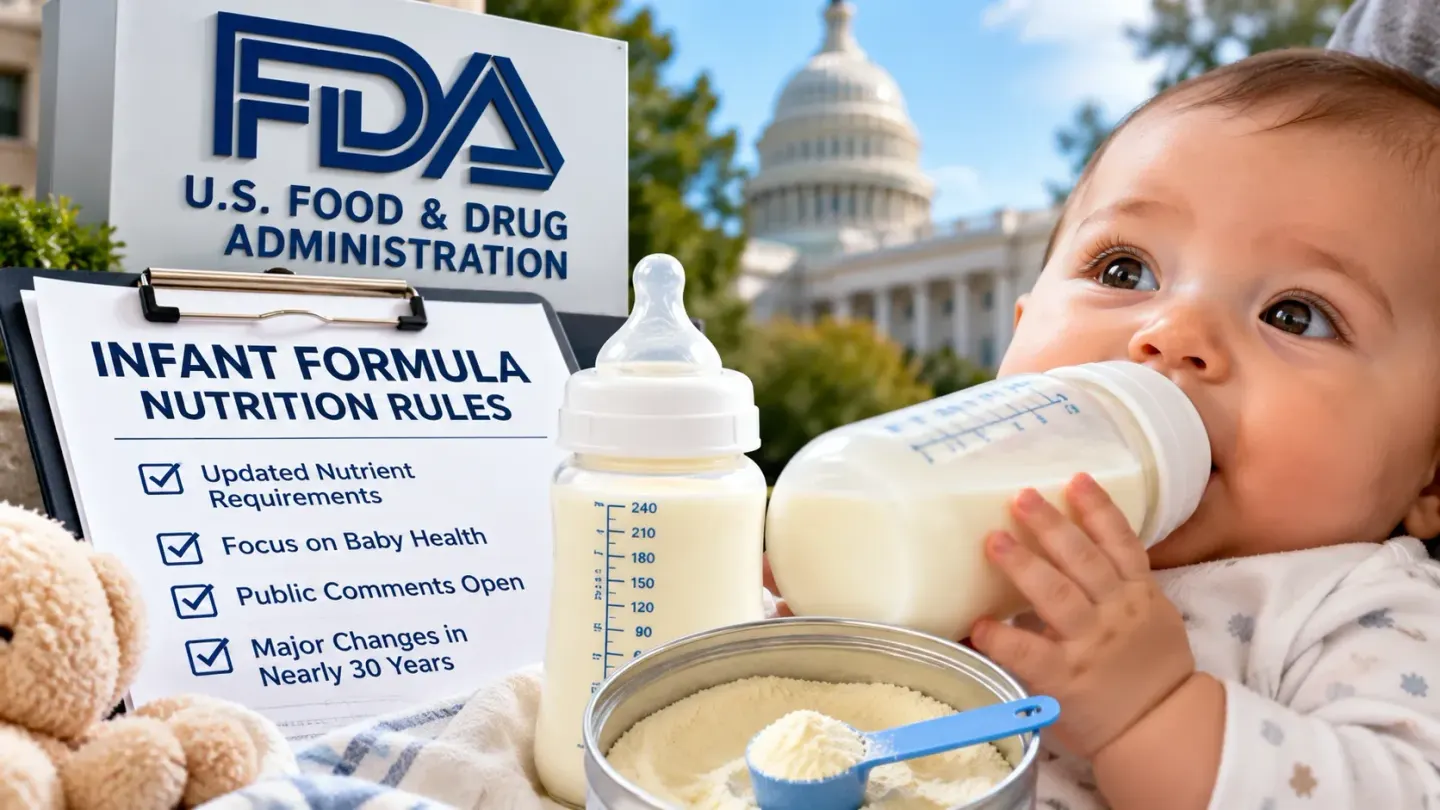
The U.S. Food and Drug Administration (FDA) has proposed new rules to update nutrient requirements for infant formula, marking a major step toward modernizing the country’s baby formula standards. Announced on October 29, 2026, the proposal is part of the Trump administration’s Operation Stork Speed initiative, which aims to review infant nutrition standards and improve access to safe, nutritionally adequate formula.
According to the FDA’s official announcement, the proposed rule represents the first phase of a broader review of the 30 nutrients required in infant formula. The agency is examining whether existing minimum and maximum nutrient levels reflect current scientific evidence about babies’ nutritional needs.
The first phase covers eight nutrients: vitamin A, vitamin D, iodine, manganese, chloride, selenium, sodium and potassium. The FDA is proposing changes to the required levels of vitamin A, vitamin D, iodine and manganese, while retaining the existing specifications for the other four nutrients.
Under the proposal, the FDA would lower the permitted range for vitamin A, increase the minimum and maximum levels for vitamin D, raise the minimum iodine level while lowering its maximum, and reduce the minimum manganese level while introducing a maximum limit. The agency also proposes changes to how vitamins A and D are measured and updates to infant formula labeling requirements.
The proposed changes are intended to bring formula standards in line with current scientific understanding of infant nutrition. The FDA said its review considers evidence related to nutrient requirements, human milk composition, international standards and clinical research published since the agency’s last comprehensive review in 1998.
Another important part of the initiative is the possible future inclusion of additional nutrients commonly added to infant formula. The FDA is seeking public input on ingredients such as docosahexaenoic acid (DHA), arachidonic acid (ARA) and L-carnitine. These nutrients will be examined as the agency continues its review, but the current proposal does not make them newly required ingredients.
The rules are not final, and the FDA is accepting public comments on the proposal. Parents, healthcare professionals, researchers and infant formula manufacturers can share their views before the agency makes a final decision. The deadline is 120 days after publication of the proposed rule in the Federal Register.
The FDA plans to review the remaining required nutrients in two additional phases before consolidating the proposed changes into one comprehensive final rule. If finalized, the changes would give manufacturers time to reformulate products and update their labels. The proposal includes a compliance period of three years after the final rule’s effective date.
For parents, the agency has emphasized that the proposed changes do not mean currently available infant formula is unsafe. The FDA says formulas currently on the U.S. market remain safe for babies and that the review is intended to modernize nutritional standards, not respond to a finding that existing formulas are unsafe.
Families should therefore continue following appropriate feeding guidance and consult their pediatrician if they have questions about their baby’s nutritional needs. Parents should not change or stop using an infant formula solely because of the proposed rule.
The review comes as infant formula safety and nutrition remain important public health issues in the United States. Through Operation Stork Speed, the administration has also focused on formula testing, potential contaminants and improvements to the infant formula supply chain.
The proposed FDA infant formula rules could eventually affect manufacturers, retailers and families across the country. However, the final requirements will depend on the scientific review, public feedback and the agency’s regulatory process.




التعليقات
حساب مجاني يتيح لك المشاركة في النقاش.
جارٍ تحميل التعليقات…