

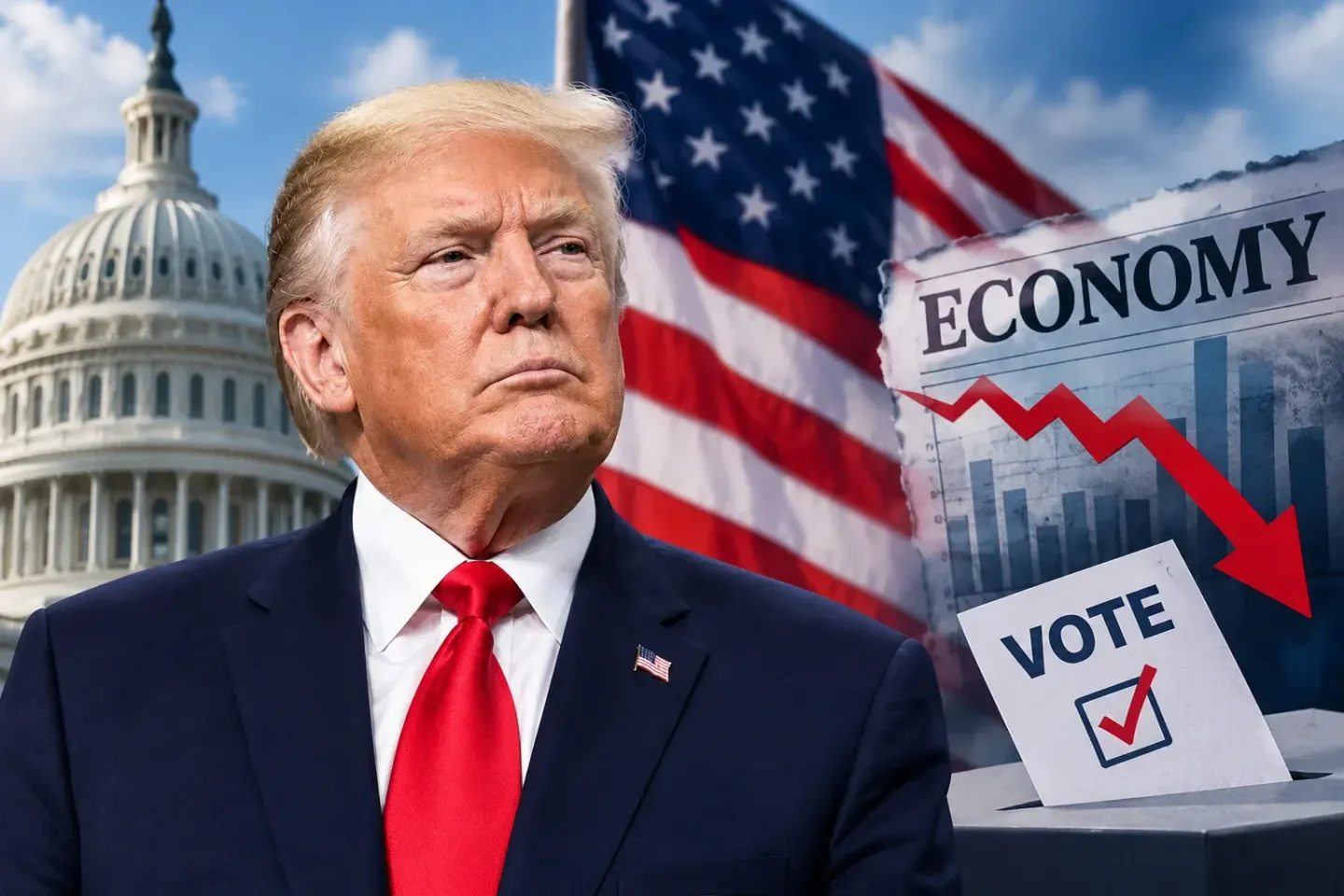
A new CNBC All-America Economic Survey has revealed growing public dissatisfaction with President Donald Trump’s handling of the economy, with rising prices, concerns over government corruption and opposition to artificial intelligence infrastructure emerging as major issues ahead of the US midterm elections.
The survey, conducted approximately two weeks before the congressional elections, found that 65% of respondents disapproved of Trump’s economic performance. According to the survey presenter, this was the highest economic disapproval rating recorded for Trump across his two terms and exceeded the 64% disapproval figure cited for former President Joe Biden.
Trump’s economic approval rating had also fallen by 10 percentage points, suggesting a significant deterioration in public confidence in the administration’s economic management. The findings indicate that voters are increasingly holding the president responsible for economic conditions, particularly the continuing pressure of inflation and rising living costs.
Inflation and prices remain the leading concerns for American voters. The survey found that 57% of respondents identified rising prices as either their top concern or their second-biggest concern. Meanwhile, 80% said prices were increasing, and 55% believed they were rising faster than usual. The latter figure was five percentage points higher than a year earlier.
The broader assessment of the US economy was similarly negative. Only 20% of respondents described the economy as excellent or good, while 80% rated it as fair or poor. Notably, the survey presenter observed that Republican respondents were also becoming less optimistic than they had been previously, suggesting that economic pessimism was extending beyond the president’s political opponents.
Government corruption emerged as another significant concern ahead of the midterm elections. For the first time, the survey asked respondents about their concerns over corruption in government, and 36% of registered voters identified it as a top issue.
The findings also revealed strong opposition to potential conflicts of interest involving public officials. More than 90% of respondents said government officials should not be permitted to trade stocks or conduct business with companies holding government contracts. The results suggest that transparency, accountability and restrictions on officials’ financial dealings could become important campaign issues.
Artificial intelligence and data center development also featured prominently in the survey. Public resistance to large data centers near residential communities appears to be creating a potential political and regulatory challenge for the technology industry.
According to the survey, 63% of respondents would oppose a data center being built within 10 miles of their homes. The findings also showed that 52% supported pausing advanced AI development until the government establishes appropriate regulations.
The survey presenter described the trend as a form of “not in my backyard” opposition to AI infrastructure, reflecting concerns about the local impact of data centers and the need for greater government oversight of rapidly advancing technology.
Such opposition could complicate plans to expand data center infrastructure across the United States, particularly in politically competitive areas where local concerns may influence voters. The findings suggest that AI regulation and technology development could become increasingly relevant to election campaigns, alongside traditional economic issues.
The survey also highlighted potentially significant shifts in voter preferences in states with competitive Senate races. Across eight states identified as having closely contested Senate seats, respondents favored Democratic control of Congress by a margin of four percentage points.
That finding stands in contrast to the same states’ combined voting pattern in the 2024 presidential election, when Donald Trump won them by a margin of 10 percentage points, according to the survey presenter.
Although the results do not necessarily indicate a lasting political realignment, they suggest that voter preferences in these battleground states may be changing. Economic dissatisfaction, concerns about corruption and disagreements over AI development could all influence the political environment ahead of the midterms.
However, the survey presenter cautioned against assuming that dissatisfied Republican voters would necessarily switch their support to Democratic candidates. Instead, one possible outcome is that some Republican voters could choose not to participate in the election.
Such a decline in turnout could have important consequences in closely contested races, where relatively small differences in voter participation can influence the outcome.
Overall, the CNBC All-America Economic Survey points to a challenging political environment for Republicans ahead of the congressional elections. Persistent concerns about inflation, widespread pessimism about the economy, growing demands for government accountability and opposition to nearby data centers are emerging as important issues for voters.
While the survey does not guarantee a particular electoral outcome, its findings suggest that economic confidence and voter turnout could play decisive roles in determining the balance of power in Congress.



التعليقات
حساب مجاني يتيح لك المشاركة في النقاش.
جارٍ تحميل التعليقات…